
“Dolly” is pet form of an Ancient Greek-derived name later repurposed for toys and film cameras.
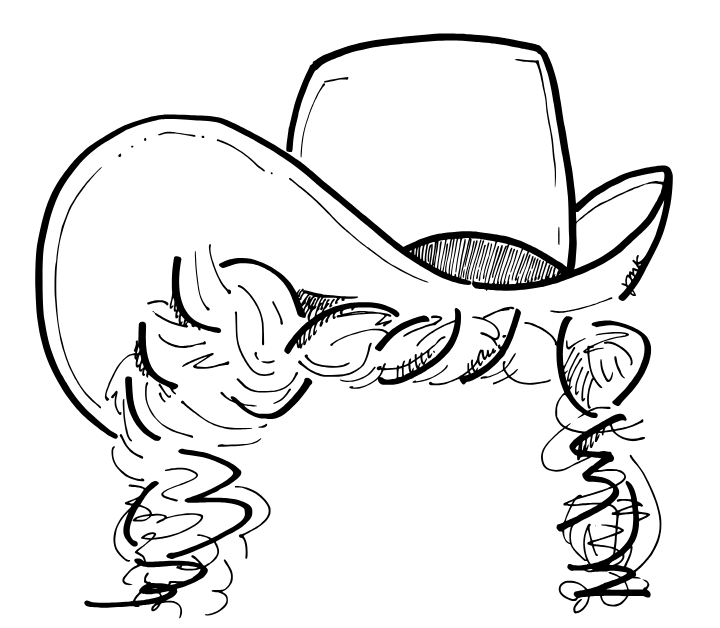
We lost a great one last week. So great, in fact, that many likened Dolly Parton, the once and future Queen of Country Music, to some kind of angel.
Film critic Robert Ebert, for instance, described feeling “filled with a strange ethereal grace” after once talking to Dolly.
Divine descriptions are indeed fitting for Dolly—and not only for her talent, character, generosity, and charisma. But also for her very name.
Never miss a mash! Feed your inner word nerd and subscribe to get Mashed Radish fresh in your inbox.
Dolly etymology
The name Dolly is ultimately a pet form of the name Dorothy.
Dorothy is the English form of Dorothea, the Latin version of a female given name originating in the Greek Dōrothéā (Δωροθέα).
The Greek Dōrothéā literally means “gift of God.”
Dōrothéā breaks down to dôron (δῶρον, “gift”) and theá (θεά, “goddess”). In reverse, those elements yield a male counterpart: Theodore, via Theódōros (Θεόδωρος).
The name Dorothy started its English 9-to-5 by at least the 1500s, and it was soon shortened into the affectionate Doll.
Now, when it comes to names, English has shown a proclivity to play with what are called liquids: the consonants r and l. Harry was dubbed Hal; Terry, Tel; Derek, Del.
Several prominent girls’ names were similarly clipped: Mary to Moll, Sarah to Sall, and, yes, Dorothy to Doll. Shortened to be sweet, these nicknames were then lengthened with a diminutive –y to be yet sweeter: Moll to Molly, Sall to Sally, and Doll to Dolly.
Molly, by the way, sallied further into Polly, whose somersaulting m-to-p is mirrored by Peggy, which hails from Margaret.
Doll etymology
Doll didn’t only shift in sound: it also shifted in sense.
As a pet form of Dorothy, Doll was evidently widespread enough to lend itself as a generic term for a beloved young woman or mistress. The Oxford English Dictionary (OED) records this sense by 1560.
It is from this generic sense of doll that the object of doll affection shrank to the size—and prevailing meaning today—of a child’s toy. The OED finds doll for a “baby doll” around 1690.
The Latin word for doll, pūpilla, is the source of pupil, as in the hole of the iris of the eye. Find out why!
English isn’t only fond of nicknames. It has also liked repurposing popular names as monikers for various implements and devices, especially those that in some way take the place of the everyday, common worker (bearing an everyday, common name).
Consider a jack, jimmy, and billy. Joining them are jenny—and, that’s right, dolly. In the late 1700s and early 1800s, dolly came to name a kind of short wooden pole used to stir clothes, so called for its resemblance to a toy doll, apparently.
In addition to some other mechanical contrivances, small platforms on wheels—including hand trucks and mobile bases for film cameras—also earned the name of dolly by about 1900.
How do hand trucks resemble a doll? As the other OED, the Online Etymology Dictionary, quips in its entry for the word, “Doesn’t look like one to me, either, but that’s what they say.”
That almost sounds like it could be a line from a Dolly song. Almost.
Aftermash: Jolene
Dolly has never been a trendy name.
According to Social Security Administration data, the name Dolly peaked in 1908, when it was the 316th most popular name given to girls in the US that year.
It ranked 482 in 1946, the year Dolly was born. Since 1971, the name has fallen out of the top 1000 most popular girls’ names.
It’s a different name that has helped secure Dolly’s enduring popularity, though: Jolene. Dolly released her acclaimed “Jolene,” about a beautiful temptress, in 1973.
Like Dolly herself, the name Jolene appears to be an American original. As Oxford’s Dictionary of First Names explains, Jolene is:
… a recent coinage, combining the short form of Jo with the productive suffix –lene, extracted from names such as Marlene. It seems to have originated in America in the 1940s. It was made famous by a hit song with this title, recorded by Dolly Parton …

Leave a Reply