
Shepherds, sailors, and baseball players all make etymological cameos in this compilation of corporate jargon.

While everyone else is rushing to get everything wrapped up before the holiday break, Workplace Word Origins is still playing catch-up.
Fittingly, in this roundup, our radish-brained employee is trapped in a hamster wheel. He also finds himself turned into a hand, baseball, and shepherd. Is it all too big an ask for him?
Speaking of a “big ask,” that noun usage of ask leads off this latest collection before handing it off to all hands, staff, touch base and other baseball terms, and nimble.
Never miss a mash! Feed your inner word nerd and subscribe to get Mashed Radish fresh in your inbox.
Ask

Do you hate it when a coworker says something like “It’s a big ask”? ‘Ask’ is a verb—not a noun—you cry! Well, take it up with Old English.
🔑 We have record of ‘ask’ being used as a noun dating back to the 10th century. It took the form ‘æsce’ and specifically signified a legal inquiry into the recovery of stolen goods.
By the late 1200s, we have evidence for ‘ask’ being more broadly used for a ‘a request, demand.’ It took the form ‘axe.’ *Table* that for a moment.
The English language loves to convert verbs into nouns—and nouns to verbs and all manner of other combinations of parts of speech. And that *wows* me.
It’s part of the DNA of the language, and, as the ‘ask’ example shows, it’s far from new.
As another example from business-speak that’s far older than you think: ‘solve.’ Found as a verb in the mid-1400s. Already used as a noun by the late 1700s.
⚡️ When this part-of-speech conversion is done for more rhetorical effect, it’s known as ‘anthimeria.’
Shakespeare loved it, as in King Lear: “The thunder would not peace at my bidding.” Advertisers love it. KFC has just recently been running ads whose tagline is: “The Colonel lived so we could chicken.” We all love it, both practically (“Google it”) and playfully (“Beer me”).
If ‘ask’ has been used as a noun for so long, if the phenomenon is so common in English, why does it irritate us so much?
I think it comes down to context. Many of us most often encounter ‘ask’ in work settings, where it is definitely used as jargon. Jargon creates useful communication shortcuts—and I have to wonder in the specific case of the noun ‘ask’ if it comes across as less demanding, distancing the asker from the burden of the ask. But jargon gets overused. Something deep in our limbic system as humans can’t stand this. Then we fall prey to recency bias, assuming something is new only when we’ve noticed it for the first time. And then we’re lamenting that the English language is dead when we are, in fact, exemplifying just how robust it is! (More on jargon in the comments.)
✨ Etymologically, the noun ‘ask’ is based on the verb ‘ask,’ a word of Germanic stock with distant cousins in Latin, Sanskrit, and other Indo-European languages. Its ancient sense is “to seek.” Not too much else to ask of its origin.
Now, ‘axe.’ If you have ever judged the pronunciation of ‘ask’ as ‘ax’ as uneducated, back up.
First, this judgment has probably been explicitly or implicitly directed at speakers of Black English. CHECK YOURSELF.
Second, this phenomenon—of rearranging sounds in a word—is also very widespread in English. It even has a fancy name: ‘metathesis.’ ‘Bird,’ as just one example, began as ‘brid.’
💡 ‘Ax’ was a perfectly acceptable and common variant of ‘ask’ for much of its history. Until some standardization in the 1600s. And until some of us got racist about it.
All hands
If you call an ‘all hands’ staff meeting, you shouldn’t be surprised if a bunch of SAILORS showed up—if we’re going to be etymological about it.
That’s because the ‘hands’ in ‘all hands’ originally belonged to sailors.
🔑 Evidenced as early as 1580, ‘all hands’ first signified the full company of sailors on a ship. It grows out of an earlier use of ‘hand,’ dating back to at least the 1550s, to denote a “manual laborer.”
Funny. If you’re reading this, you probably do most of your work by hand. That is, on computer keyboards and touchscreens.
I couldn’t think of a more apt way to refer to the modern, white-collar, digital workforce in 2025 than using a word—‘hand’—that has long encoded ‘blue-collar’ and all of its class(ist) implications.
But that’s not how we mean ‘hand’ or ‘manual’ (“done with the hands” via Latin ‘manus,’ “hand”)…
For its part, ‘hand’ hasn’t really changed in English. It comes from the Old English, well, ‘hand’ with effectively identical cousins in Germanic languages.
I digress!
⚡️ The expressions ‘hand’ and ‘all hands’ are excellent examples of something that can be as hard to say as it is to spell: synecdoche.
SYNECDOCHE!
‘Synecdoche’ is a figure of speech in which a part represents the whole. It’s from Greek, and its elements literally mean “receiving together.”
Workers, whether cultivating wheat or placing stones, rely on their hands, of course, to do the job, and so their hands stand in for their work itself.
And the hands of sailors are particularly industrious considering the vast and complex array of knots to tie and sails to set.
It’s no surprise that sailors’ hands came to symbolize their role—and that their hands together came to represent the entire crew.
✨ By the 1650s, ‘all hands’ had broadened to refer to any group of people collectively engaged in work.
The nautical roots of ‘all hands’ may be more obvious to many in the expression ‘all hands on deck,’ established by the 1790s and originally an order for the entire crew to report to the deck in an emergency.
Rhetorically similar to ‘all hands,’ in fact, is ‘staff.’
But ‘staff’ is not *technically* synecdoche. It’s more like another term hard to say and spell: metonymy.
I think that’s enough flashbacks to high school English for one day. I’ll pick up the metonymic Workplace Word Origin of ‘staff’ in my next edition.
Staff
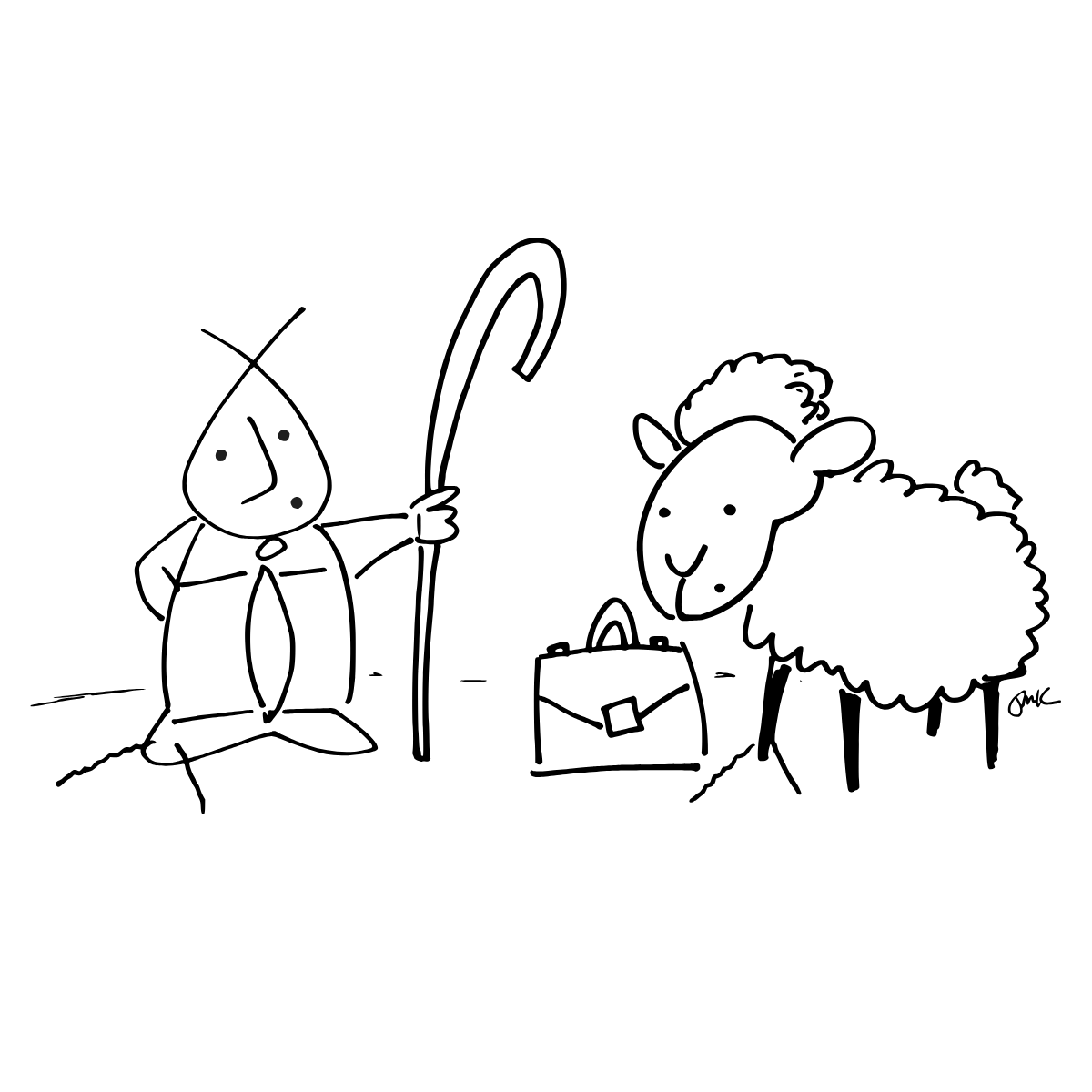
Don’t call your coworkers ‘sticks’ in the mud or say they have ‘em up their a—although you’d be justified, in a way, thanks to the etymology of ‘staff.’
🔑 ‘Staff’ comes from the Old English ‘stæfe,’ which has Germanic roots. It originally referred to a long stick or rod, as used for walking or as a weapon.
Like a pilgrim’s staff, which I’m sure some way-back wayfarers had to employ both ways.
Shepherds have crooks. Bishops, croziers. Monarchs, sceptres. Police, batons.
So strong are their associations to their iconic staffs that we seldom depict them without them.
So strong are those associations that the staff itself—even called ‘staff of office’—became a symbol of office and authority more generally.
This metaphorical extension was already found in Old English.
The particular kind of metaphor at work is called metonymy: a figure of speech in which something is referred to by another thing closely associated with it.
Synecdoche—that even harder word we saw in the last Workplace Word Origin on ‘all hands’—is considered a specific form of metonymy.
Some familiar examples: ‘crown’ standing in for a monarch, the ‘bench’ signifying the judicial system.
But how did ‘staff’ come to represent employees?
Militaries.
Yet another Workplace Word Origin showing how the language—and organization—of modern work is indebted to the military.
Militaries love a staff, such as in the form of the colors, standards, and guidons flown on poles. Officers carried various symbolic staffs to symbolize their authority, like a field marshal’s baton, marine corps’s swagger stick, or, more anciently, a ceremonial mace.
⚡️ In the 1600s, the meaning of ‘Stab’—the German word for and close cousin of the English ‘staff’—developed from “symbol of office or authority” to “office, authority” to “people in authority,” especially military officers in charge of non-combat regimental duties.
According to the OED, English picked up this sense of ‘staff’ for military officers by 1632 in a translation of a Swedish military text in turn based on German usage.
Quartermaster, provost, chaplain, surgeon—all examples of early military staff.
‘Surgeon’ may be the key to the next phase, as early instances of ‘staff’ applied to personnel concerned people working in military hospitals.
✨ By the 1830s, ‘staff’ was established in its current sense of “the people employed by an organization.”
The evolution of ‘staff’ is preserved in the military today. Think staff sergeant. Staff officer. General staff. Chief of staff.
Yep, ‘chief of staff’ first referred (1800s) to a senior staff officer in the US military—and still does. It extended to a president’s chief of staff, the US president also being the commander in chief, by 1875 and spread from there.
Fun bonus fact: ‘stave,’ as in a length of wood used for a building or barrel, was historically taken as the singular of ‘staves,’ but ‘staves’ was originally the plural form of ‘staff.’
Touch base
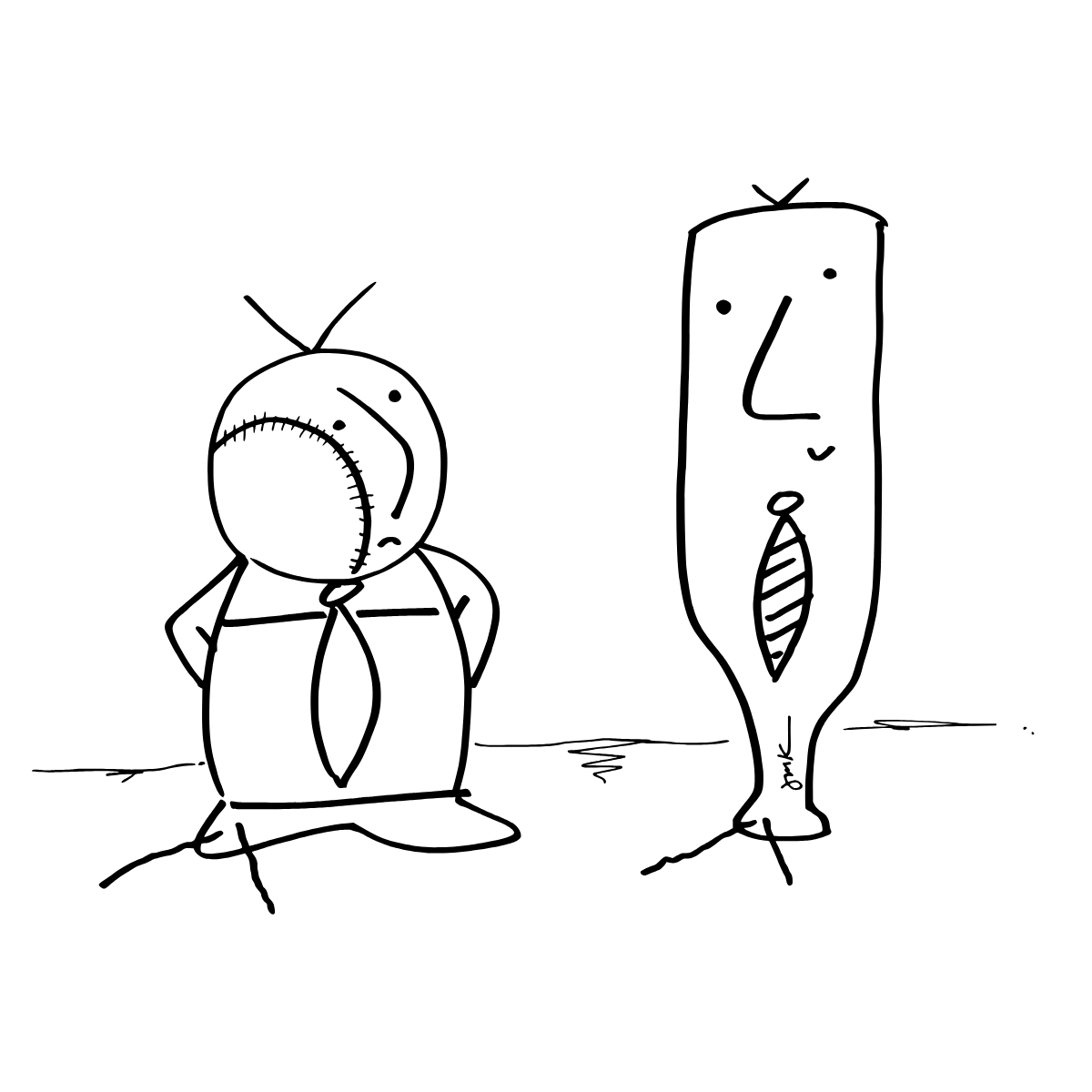
What’s the first thing that comes to mind with the phrase ‘touch base’?
Chances are that it’s not baseball.
But that’s where the expression originates.
In honor of the World Series, which opens tonight with the LA Dodgers at the Toronto Blue Jays, this week’s Workplace Word Origin is on TOUCH BASE—and everyday baseball expressions.
Yep, touch BASE.
It’s right there. And it’s BEEN right there. 🤦
🔑 The Oxford English Dictionary finds evidence for ‘touch base’—for making contact with a base for various baseball plays—all the way back in 1875.
1875, folks.
‘Touch base’ isn’t some newfangled neologism of the modern office.
⚡️ By the 1910s, ‘touch base’ had broadened to refer to other kinds of contact-making, especially when briefly meeting or talking with someone again, as we use it today.
Since then, we’ve also nouned ‘touch base’—and I find myself increasingly writing it as a closed compound, ‘touchbase,’ when I schedule Zoom calls, say, under the name.
(I also title such meetings using ‘catch-up,’ though I tend to hyphenate that one.)
‘Touch base’ has become so common and useful—so metaphorically enmeshed in our everyday lexicon—that most of us don’t even register that its ‘base’ first named those bags around the diamond.
As in first, second, third, and home.
Such invisibility is true of a great number of other words and phrases that have become so familiar we don’t even think of them as baseball terms anymore.
(Unless, you know, we’re watching or playing the game.)
By the numbers, American football is America’s sport now, but the sheer volume of expressions we use from baseball shows how much that sport has been our national pastime.
Below is a small sample of more obvious examples. How often do you use them?
And I ask you, how often do you *consciously* connect them to baseball when, for example, ‘ballparking the cost of the campaign’ or ‘throwing a curveball in the project timeline’?
- ballpark (figure)
- big swing
- curveball
- heavy hitter
- homerun
- inside baseball
- (out of) left field
- off base
- pinch hit
- rain check
- soft ball
- step up to the plate
- strikeout
✨ Fun fact: ‘grand slam’ was used in the card game Bridge long before baseball.
Nimble

When did ‘nimble’ become a corporate euphemism for ‘Yeah, we’re laying off 14,000 of you’? TLDR: a long time ago.
On Tuesday, Amazon announced a massive workforce reduction. The headline was 14,000 layoffs, though it literally read “Staying nimble and continuing to strengthen our organizations.”
🔑 ‘Nimble’ comes from the Old English ‘numul,’ among other forms, meaning “quick to grasp.” It’s based on ‘nim,’ meaning “to take,” and the suffix ‘-le,’ signifying “apt to” taking.
(When a corporation is being nimble, it feels like they are taking something, all right: taking your job.)
First, NIM:
‘Nim’ was English’s verb for “take”—and would be today if it weren’t for Viking invasions of England.
⚡ ️English inherited ‘nim’ from Germanic roots, but it borrowed “take” from early Scandinavian along with a great many other everyday words, like ‘egg,’ ‘sky,’ ‘call,’ and ‘lift.’
Also found in Old English, ‘take’ completed its takeover of ‘nim’ by the 1500s, though ‘nim’ did reappear as slang for “to steal” in the 1600s.
Second, THAT B:
That ‘b’ is ‘excrescent,’ a fancy term for a sound added to a word without etymological backing.
⚡️ This is common. We added such a ‘b’ to ‘thumb, ‘limb,’ and ‘numb,’ itself related to ‘nimble’ via a form of ‘nim’ meaning “taken,” that is, “deprived (of sensation).”
Experiment! Put your palm near your mouth and say ‘hamster.’ Do you feel a puff of air? That’s because you are pronouncing an excrescent ‘p.’
These sounds make pronunciation easier in certain environments. Sometimes they are even added to the spelling, as in ‘nimble.’ And they are not limited to bilabials (p, b, m, w sounds). Most of us add a vowel in the middle of ‘realtor,’ for instance.
Now, NIMBLE:
When Amazon says it’s “staying nimble” while restructuring, it’s not doing anything lexically novel.
As we have seen before in Workplace Word Origins, a lot of jargon isn’t new. It’s just newly prominent—and newly irritating—to us.
✨ The Oxford English Dictionary has ‘nimble’ going back to 1918 describing companies or investors as “readily adaptable to variable market requirements or economic conditions.”
(Still sound like jargon? No, that’s business. Humans are replaceable labor.)
This sense of ‘nimble’ appears to grow out of an older sense recorded in 1801, characterizing money that has a “quick return on investment.” Typically in the alliterative phrase ‘nimble ninepiece,’ et al.
Today, corporations use ‘nimble’ in organizational contexts: “reducing layers, increasing ownership, and helping reduce bureaucracy,” to quote Amazon.
But practically—emotionally—it means “doing more faster with less” to the worker.
When we look at corpus data, we see how widespread ‘nimble’ is today in business contexts, and it’s extensively used—collocated with—before ‘team,’ ‘competitors,’ ‘organizations,’ and ‘startups’ and after ‘stay’ and ‘remain.”
While ‘agile’ is and long has been a synonym for ‘nimble,’ data shows that in business contexts ‘agile’ predominantly refers to agile software development and related practices.
As companies stay nimble, more and more of us are simply trying to stay in our jobs.
***
For more Workplace Word Origins, see the first five roundups:
- Workplace Word Origins 5: Black Friday, chef, boutique
- Workplace Word Origins 4: jargon, milestone, sesquipedalian, benchmark, team
- Workplace Word Origins 3: engineer, salary, office, freelance, deadline
- Workplace Word Origins 2: resilience, company, focus, thrilled, code
- Workplace Word Origins 1: negotiate, strategy and tactics, incentive, recruit, network
 Mashed Radish
Leave a comment