
Philadelphia traffic jams, Greek storehouses, and Latin heads.
I’ve been slacking on the job. The Workplace Word Origins roundup job, that is.
I’ve gotten some great feedback on these posts. You like them! You really like them!
Fun fact: Sally Field never said that in her much parodied Academy Awards acceptance speech in 1985. She actually said: “And I can’t deny the fact that you like me … right now … you like me!”
Thanks for sharing the good word. And goodness, thanks, as always, for reading.
This roundup is going to be a little different and a little shorter. I’m starting with my latest Workplace Word Origin, because it’s timely: Black Friday.
Then, while Paris is still on my mind, I’ll round it out with the preceding two, as they concern boutique and chef.
I hope that everyone had a safe and festive Thanksgiving—including you, Sally Field, wherever you are and however you celebrated the holiday.
For my readers not from the US, I hope you had a great Thursday—and that it was safe and festive in its own way.
No mashed radish at our table, though certainly plenty of mashed potatoes. And yes, when I started this blog well over a decade now, I did actually mash radishes. Verdict? A bit bland. Season generously. Now, speaking of seasoning, coating some radishes with olive oil, salt, and pepper and roasting them in the oven? Delicious.
OK, time to reheat the LinkedIn leftovers.
Never miss a mash! Feed your inner word nerd and subscribe to get Mashed Radish fresh in your inbox.
Black Friday

Do you avoid Black Friday shopping because of the traffic? Well, line up behind the 1960s Philly police—who were so vexed by post-Thanksgiving shopping traffic they called the day ‘Black Friday.’
Contrary to popular belief, ‘Black Friday’ is not named because its resulting sales make businesses profitable—or ‘in the black’—for the year.
Evidenced since the 1920s, ‘in the black’ refers to the historic convention of recording profits in ledgers using black ink—as opposed to in red ink, which tallied losses or debts. ‘In the red’ is found as early as 1907, according to the Oxford English Dictionary (OED).
As Ben Zimmer has expertly explained, and aided by the word-sleuthing of Bonnie Taylor-Blake, a PR newsletter from 1961 credits ‘Black Friday’ to cops fed up by traffic jams:
For downtown merchants throughout the nation, the biggest shopping days normally are the two following Thanksgiving Day. Resulting traffic jams are an irksome problem to the police and, in Philadelphia, it became customary for officers to refer to the post-Thanksgiving days as Black Friday and Black Saturday.
The OED now has evidence for ‘Black Friday’ in 1960 from ‘Women’s Wear Daily’: “Reports from police officials forecasting record traffic jams, both vehicular and pedestrian, for ‘black Friday’.”
Going back to the 1570s, the adjective ‘black’ has described days associated with ruin and disaster—hence ‘black.’
‘Black Friday’ itself has historically referred to a critical moment preceding the Jacobite rising of 1745 as well as separate financial panics in London and Wall Street in the 1860s.
Mid-century police officers, of course, used ‘Black Friday’ ironically—like British students in the 1600s who used the phrase to refer to any Friday on which exams were given! Devilish, indeed.
Today, a lot of us have or take Black Friday off, perhaps making those of us who don’t feel staff shortages.
And it’s that—a pile-up of call-offs—that characterizes the earliest reference we have of ‘Black Friday’ in the specific context of Thanksgiving as such. It comes from a 1951 factory trade publication:
‘Friday-after-Thanksgiving-itis’ is a disease second only to the bubonic plague in its effects… When you decide you want to sweeten up the holiday kitty, pick Black Friday to add to the list..Friday after Thanksgiving is the company’s seventh paid holiday.
This sense did not stick, of course, though retailers, as Zimmer notes out, themselves once tried to rebrand ‘Black Friday’ to ‘Big Friday’ to evade negative associations.
Nor did that stick. Zimmer goes on to offer that retailers may have spread the ‘in the black’ origin myth—which has proven far stickier—in the 1980s in effort at a more positive rebrand.
Today, you can find ‘Black Friday’—and with the English phrase directly borrowed, with variations—all over the world. Countless storefronts in Paris, as one example, promoted various Black Friday sales when I toured its streets earlier this month.
‘Black Friday’ remains very much the day after Thanksgiving, brimming with bargains beckoning shoppers to buy buy buy.
But now, with the phenomenon so firmly and globally established, I feel like it’s become less the official kick-off of the holiday shopping season—which, if commercials and store displays are any data, has crept up to before Halloween, anymore—and more so a shorthand for any Christmastime-pegged promo.
At least the traffic has become less bad as a result?
Boutique
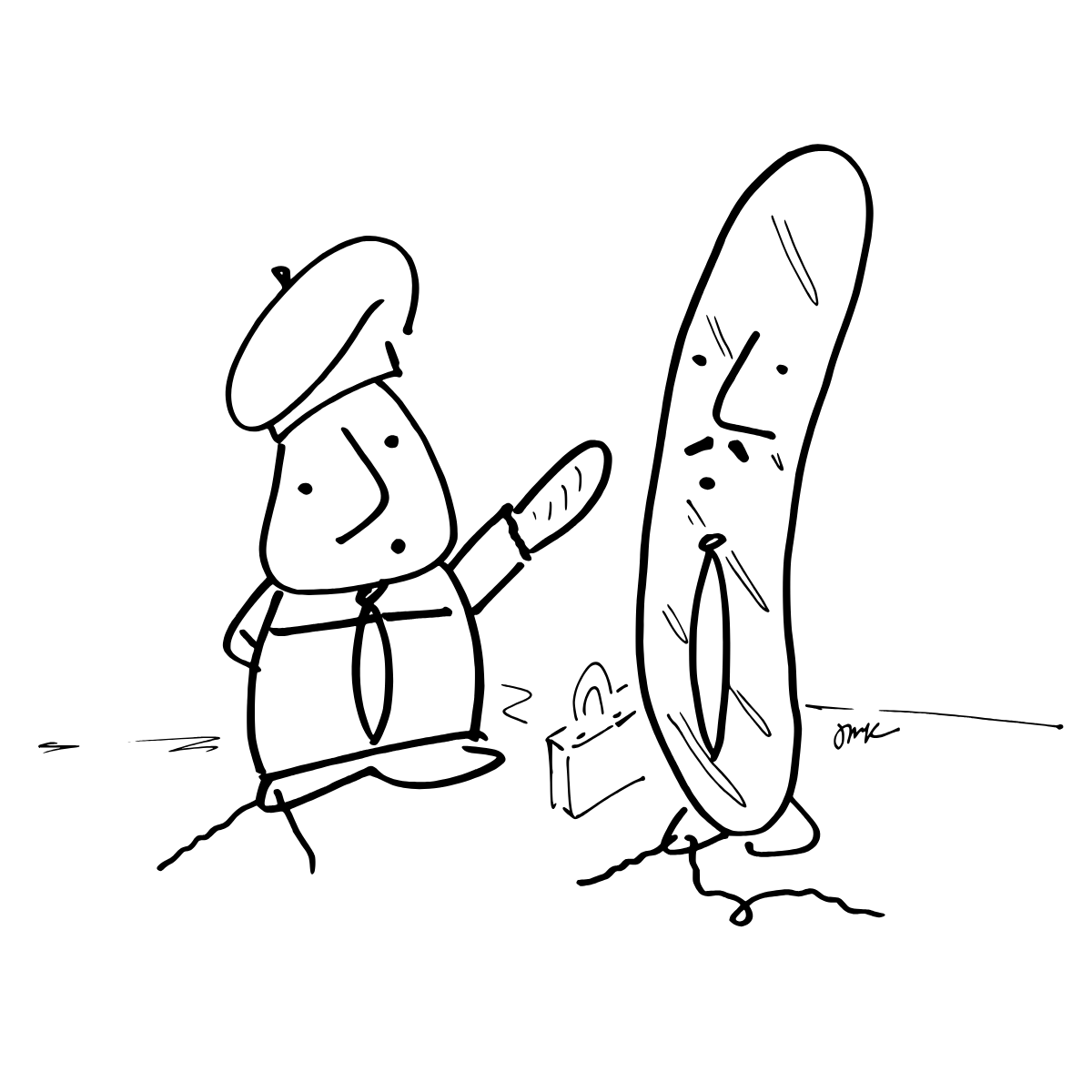
What do New York corner stores, quaint medical jars, and Parisian haute couture have to do with your consulting practice? Why, the wending ways of etymology!
Even Workplace Word Origins has to take a vacation from time to time—and it did last week. My wife and I were in Paris, taking in everything from cafés to cathedrals, patisserie to paintings.
We stayed in a chic arrondissement whose meandering, romantic rues unfolded in boutique after boutique specializing in art, antiques, and, above all, couture.
Their price tags meant our shopping never went from window to wallet, though.
But the experience, in between stuffing my face with Cézanne and pain aux aumandes, had me attending my own private salon about how ‘boutique’ went from fashion to firms.
‘Boutique’ is borrowed from the French ‘boutique,’ ultimately from the Latin ‘apothēca,’ a “storehouse” or “repository.” It’s first recorded in English in the 1760s for any old “small shop.”
Jump to the 1950s and ‘boutique’ is specifically naming small fashion shops selling ready-to-wear clothes for young women from designers—high fashion at an affordable price.
Small, specialized, exclusive—these became key characteristics of ‘boutique’ as it spread from couture to commerce. The Oxford English Dictionary cites ‘boutique agencies’ in 1968 and ‘financial boutique’ in 1984.
Data shows that, today, ‘boutique’ is still frequently used to describe agencies as well as various firms and studios, often those specializing in investment and fitness, as it happens. Far and away, though, ‘boutique’ describes hotels—though fashion, shopping, clothing, and the like still rank high.
Now, the Latin ‘apothēca’ is from the Greek ‘apothḗkē,’ also meaning “storehouse” and based on roots literally denoting “to put away.”
The Latin ‘apothēca’ went on, via French, to produce ‘apothecary,’ an archaic term for someone who prepared and sold medicines and drugs—and later their store or wares more generally.
‘Apothecary’ dates back to the 1360s, supplanted by ‘pharmacist’ or ‘chemist.’ Today, the term conjures up shelves of baroque bottles bearing elixirs mixed together in arcane proportions.
In Spanish, ‘apothēca’ became ‘bodega,’ originally “warehouse,” the sense in which it’s found in English in the 1640s. In both languages, ‘bodega’ later extended to “wine cellar, winery, wine shop, wine bar.”
‘Bodega’ evokes, of course, a kind of small grocery store dotting the corners of New York and historically operated by Hispanic owners, especially of Puerto Rican descent, in Spanish-speaking neighborhoods.
This ‘bodega’ dates back to the 1950s in English—around the same time we see notable shifts in the word ‘boutique.’
While ‘boutique’ certainly still conveys small but sophisticated today, perhaps it was bigger changes in the economy, demography, and opportunity after World War II that helped propel its evolution.
Chef
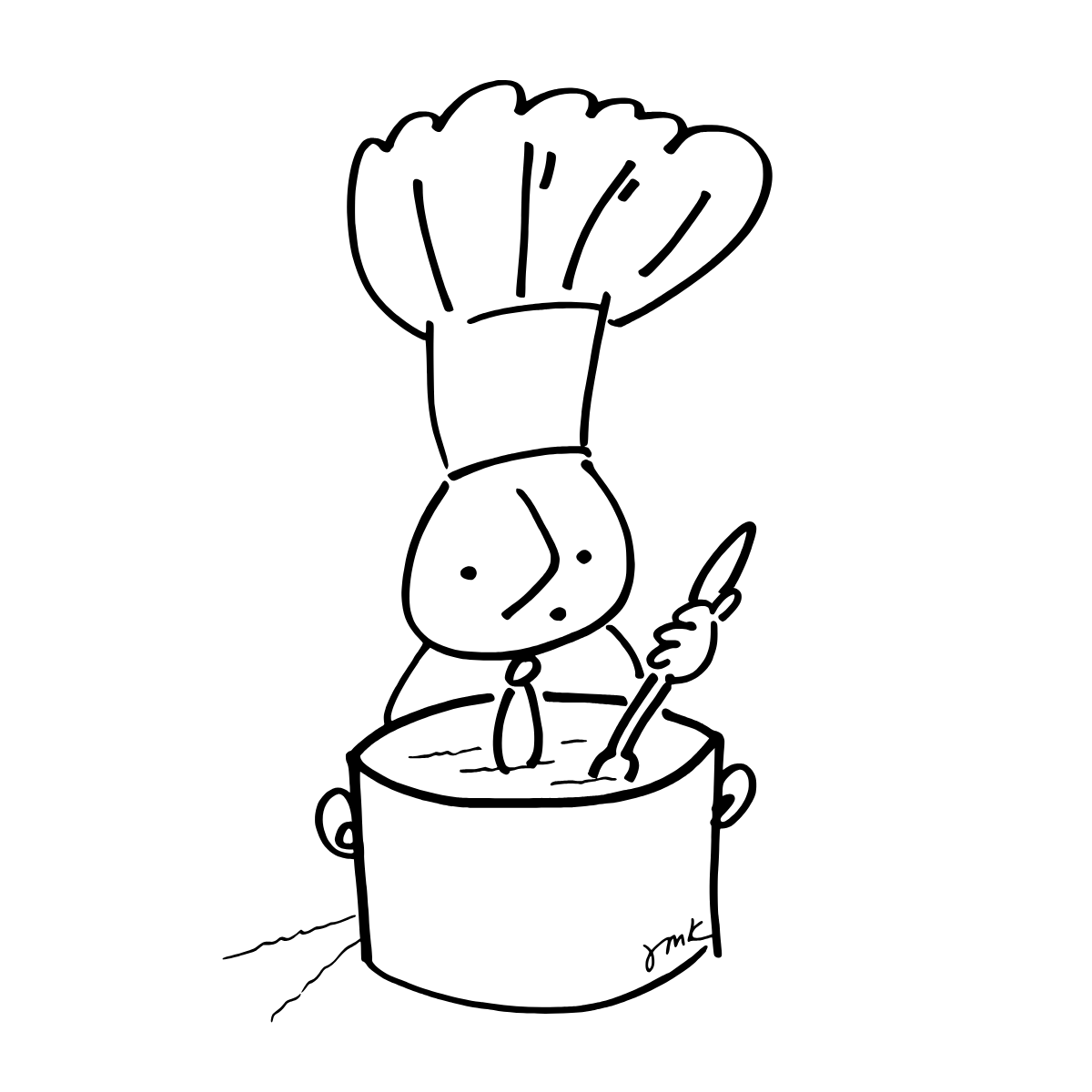
If I say “Yes, chef!” in English, you’d expect me in starchy whites dashing fine food into dining rooms. But in French or German? I might be in a hoodie on Zoom call, telling my boss what they want to hear.
That’s because, etymologically, a ‘chef’ is a ‘chief’—and a ‘chief’ is a ‘head.’ English will use ‘chief’ for ‘head, ’and ‘head chef’ for ‘chief cook,’ but ‘chef’ for neither ‘chief’ nor ‘head.’
Head scratched—erm, scrambled?
The English ‘chef’ is shortened from ‘chef de cuisine,’ or “head of the kitchen.” The short form is recorded by the 1820s; the full phrase, the 1790s.
🔑 The French ‘chef’ derives from an older form, ‘chief,’ meaning “leader, ruler, head,” and ‘chief’ ultimately traces back to the Latin ‘caput,’ meaning “head.”
English’s own word ‘head’—itself shaved down from the Old English ‘heafod’—is a cousin of Latin’s ‘caput’ through ancient relations.
Out of the Latin ‘caput’ sprung many derivatives, from ‘achieve’ to ‘precipitate’ and with such words as ‘capital’ and ‘chapter’ in between.
In Italian, ‘caput’ became ‘capo.’ In Spanish, ‘jefe.’ Neither are the kind of boss—in their English usage—you want to cross.
In Old French, ‘caput’ became ‘chief,’ which English borrowed in the 1300s—and still widely uses today, from Arrowhead Stadium to the Oval Office.
⚡ That makes ‘chef’ and ‘chief’ so-called ‘doublets’: a pair of words that come from the same source but entered at different stages of a language, resulting in different forms and senses.
Today, French uses ‘chef’ for many a “leader,” including in the kitchen.
Borrowed from French, the German ‘Chef’ is the grammatical masculine gender for various heads, chiefs, and bosses. The feminine is ‘Chefin,’ and neither form is used on its own for the culinary ‘Koch’ or ‘Köchin.’
The German ‘Koch’ is related to English’s ‘cook’—and our use of ‘chef’ for the title (as opposed to the task) reveals historical differences in prestige between vocabulary we get from French vs. native English. For instance, we eat ‘beef’ and ‘pork’ (French) but raise ‘cows’ and ‘pigs’ (English).
🧑🍳 Bonus: The iconic chef’s hat is known as a ‘toque.’ Tales of the origin of the toque are as tall and have as many folds as the white, pleated hat itself. One claim touts the toque as a résumé, with 100 pleats signifying the skill to cook eggs in as many ways.
The toque tradition goes back some centuries, fussily formalized in the early 1800s by Grimod de La Reynière—a gourmand, socialite, and potential first food critic—to dignify chefs.
Decades after him, chef Georges Auguste Escoffier—credited with inventing such dishes as the Peach Melba at London’s storied Savoy Hotel—further professionalized cooking, including the ‘brigade de cuisine.’
Drawing from Escoffier’s military experience, the kitchen brigade’s hierarchical staffing system served up such familiar positions today as ‘sous chef,’ occupying the second-in-command “under the chief.”
***
For more Workplace Word Origins, see the first four roundups:
- Workplace Word Origins 4: jargon, milestone, sesquipedalian, benchmark, team
- Workplace Word Origins 3: engineer, salary, office, freelance, deadline
- Workplace Word Origins 2: resilience, company, focus, thrilled, code
- Workplace Word Origins 1: negotiate, strategy and tactics, incentive, recruit, network

 Mashed Radish
Leave a comment