
Of seizing and fatherlands
Updated February 7, 2026
In San Francisco, the Seattle Seahawks rematch the New England Patriots in Super Bowl LX.
The two last faced off in 2015, when Patriots cornerback Malcom Butler saved the game for his team with a thrilling interception with seconds go and the ball at their 1-yard line.
Let’s rewatch the etymological tape, as it were, on their team names.
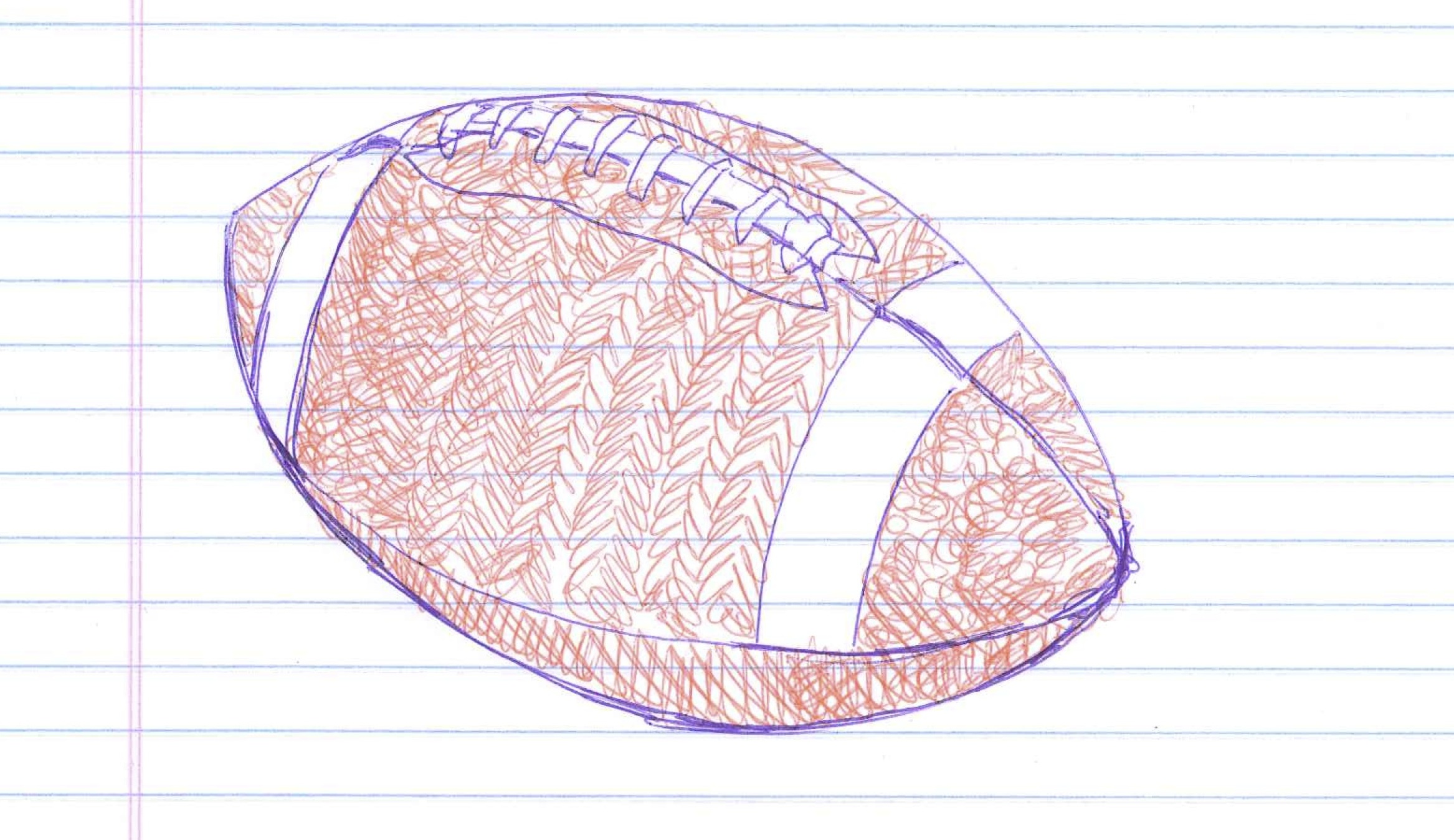
Hard hits, deep throws, gutsy calls—no, these words aren’t describing the New England Patriots besting the Seattle Seahawks in Super Bowl XLIX, but the competitive sport of etymology.
OK, not quite. The fields of American football and English etymology are many, many yards apart, but both keep fans tuning in with the surprises they offer game after game—or word after word.
Which is true, too, for hawk and patriot.
Never miss a mash! Feed your inner word nerd and subscribe to get Mashed Radish fresh in your inbox.
Hawk etymology
A seahawk is a simple compound of sea and hawk, cited as such in the 1850s.
Hawk itself is much older, evidenced as far back as 700, but you might not recognize it. In Old English, the bird went by hafoc, among other forms.
Over the course of Middle English, the f left hawk‘s nest, and its range of pronunciations and spellings gradually settled into its modern form of hawk.
Hawks are incredible birds, soaring high, fixing their sharp sight on their prey, and diving down to seize it.
And it is this seizing that ultimately gives the bird its name. Behind hawk is the Proto-Germanic *habukaz, from the Proto-Indo-European *kap, ” to grasp.”
In Latin, this root yielded capere, “to seize, grasp.”
Capable, capture, conceive, participate, prince, municipal, and (game-winning) interception are just a few of the many descendants of this prolific capere.
From the Germanic branches of this root English derives everyday words like have, behave, and heavy.
That’s heavy. An captivating word hatched from a capacious nest.
Patriot etymology
The form of patriot may not have changed as remarkably as hawk‘s, but its meaning has undergone some interesting shifts.
English begins rallying behind patriot as early as 1577, enlisting the word from the French patriote, a “fellow countryman.”
But patriots weren’t always conceived in a necessarily positive light. The term has a history of marking divisions.
The Oxford English Dictionary (OED) notes a Dutch usage of the term in the 1570s describing followers of William of Orange, leader of the Dutch War of Independence. This usage, apparently, propelled the shift of the word from “fellow countryman” to a “lover of one’s country.”
In the 17th and 18th centuries, the OED records a derogatory and ironic usage of the term as a applied to a sort of sanctimonious Sam Adams:
A person who claims to be disinterestedly or self-sacrificingly devoted to his or her country, but whose actions or intentions are considered to be detrimental or hypocritical; a false or feigned patriot.
Patriot remains a loaded term in American politics. The act of calling a person a patriot can be just that—or it can be exploiting nationalistic themes of unity and freedom to single out those not deemed to be true patriots.
Identity is indeed at play in the more ancient origins of the word. Via the late Latin patriota, patriot ultimately comes from the Ancient Greek πατριωτης (patriotes).
As Greek philologists Liddell and Scott note, patriotes were “barbarians who had only a common πατρίς [patris, fatherland], πολιταυ [politau] being used of Greeks who had a common πόλις (polis, city-state).”
The Greek patriotes was also used of members of a clan, or a πατρίa (patría), a “clan.”
Behind πατρίς and πατρίa is the Greek πατήρ, “father,” from one of the Proto-Indo-European words for “father,” *pəter- (or*phter-).
For all the divisions that warring fatherlands have caused, at least the root is etymologically unifying, for *pəter- gives Sanskrit pitṛ, Greek πατήρ which we just encountered, the Old Irish athir, and English’s very own father, among its other Indo-European progeny.

 Mashed Radish
Leave a reply to Etymology, with an “eagle” eye – Mashed Radish Cancel reply