
The calliope makes a music perhaps out of tune with its literal roots.
My wife and I live in a high-rise apartment that sits right on a riverfront park along the Ohio River in Cincinnati.
Our balcony brings in a sweeping vista spanning historic neighborhoods at this boundary of Kentucky and Ohio as bridges span the wide waterway while it bends east.
But sometimes it’s not the sights that command our attention. It’s the sounds.
The horn blasts of river barges. Fireworks from festivals and ball games. Dance beats from charity walks. The oom-pah-pah of brass bands in tented Oktoberfest bier halls.
Or the warbling whistle of a calliope and its strange, shrill music of paddlewheel yesteryear.
Etymology of calliope
Up from New Orleans, the Natchez joined eight other steamboats that cruised around Cincinnati and Northern Kentucky this past weekend as part of River Roots, a multiday immersion of American river city history that kicked off celebrations for America’s 250th birthday.
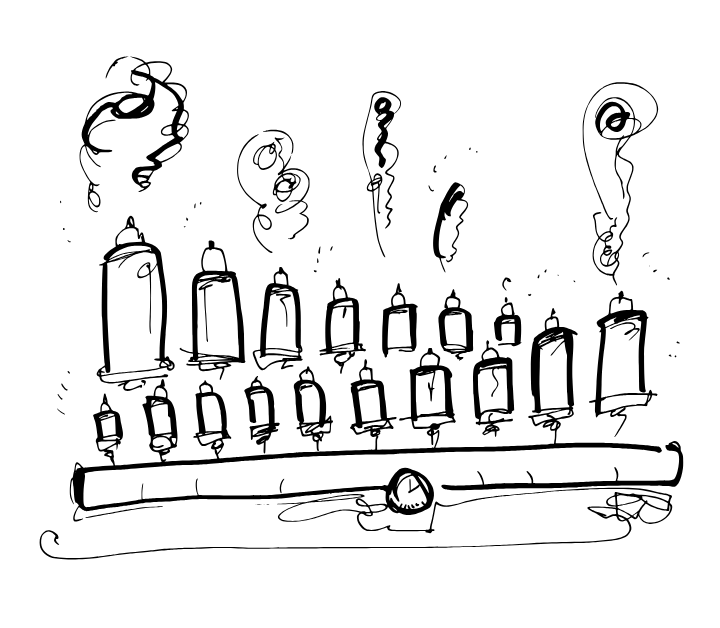
Atop the Natchez was a calliope, an instrument whose notes are produced by steam whistles.
Sometimes the instrument is played mechanically like a player piano. Other times, a keyboardist—or better, a calliopist—performed old-timey tunes.
The Oxford English Dictionary (OED) first dates calliope to July 4, 1856 in the Boston Daily Advertiser:
The newly invented steam musical instrument, which has been appropriately named ‘Calliope’, will discourse a variety of popular airs.
Newly invented?
Less than a year before in October 1855, Massachusetts inventor Joshua C. Stoddard patented his “New Musical Instrument Played by the Agency of Steam or Highly-Compressed Air.”
Stoddard intended his newfangled noisemaker to replace church bells, among other uses.
Stoddard himself didn’t call it a calliope; more digging is required to determine who first did. But the instrument, also known as a steam organ, soon after picked up the name, as we saw.
In an entry that has not been revised since 1916, the OED records steam organ as early as 1795. But the citation appears to be offering steam organ as a translation of a wind-based instrument from antiquity.
Appropriately named?
Calliope derives from the Greek Kalliopē, the name of the chief of the nine classical Muses in that ancient tongue’s corresponding mythology.
Calliope presided over eloquence and epic poetry and figured in some prominent myths.
The other eight were Clio (history); Polyhymnia (sacred poetry, mime) , Euterpe (flute, lyric poetry); Terpsichore (dancing, choral song); Erato (love poetry); Melpomene (tragedy); Thalia (comedy), and Urania (astronomy).
I once had a cat I named Clio—yes, named after the Muse of history. In addition to punning on Cleo, that common kitty moniker, I meant it as a nod to the pet felines before her that did not, alas, get more than one proverbial life. Yeah, this was how a Classics-loving newly-grad named his cat. And yeah, pretty much every vet assumed the spelling was Cleo.
Calliope: One of nine muses. An instrument atop one of nine steamboats which, as we’ll see, is on ninth life. Uncanny?
Never miss a mash! Feed your inner word nerd and subscribe to get Mashed Radish fresh in your inbox.
Calliope pronunciation
Eloquence raises elocution, which concerns speaking:
The standard pronunciation of calliope is [ kuh-lye-uh-pee ], the stress falling on the second of its four syllables.
But historically, many Americans apparently pronounced the instrument—though not the Muse—in three beats, the emphasis on the one and rhyming with rope: [ kall-ee-ope ].
This pronunciation was subject of some playful debate, however. A Black male vocal group known as the Sunset Four sang an impressive imitation of the calliope in a song dating to the 1920s called “Barnum’s Steam Calliope.” (Yes, that Barnum, as in the showman P.T.).
The song opens with one of the singers joking:
Ladies and gentlemen, we will give you a correct imitation of P. T. Barnum’s steam “calliope.”
The singer pronounces it in the standard way when another singer interjects:
“Cal-ee-OPE,” not “ca-li-o-pee”!
“Beauty” … in the ear of the be-hearer
Written Καλλιόπη in the Greek alphabet, Kalliopē became Calliōpe when Latin borrowed it. In Greek, the word literally means “beautiful-voiced,” breaking down to:
- kallós (καλλός), “beautiful”
- óps (ὄψ), “voice”
Kallós also shows up in the name of the mythical Callisto, a nymph that Zeus turned into a bear, and namesake of Jupiter’s moon. The name of the constellation of Ursa Major, or “Great Bear,” is based on Callisto’s sad fate.
Other derivatives include calligraphy, literally “beautifully written,” and the juicy adjective callipygian, meaning “having shapely buttocks.”
Related to óps is epic, from the Greek épos (ἔπος), “word, story.”
The first known pipe organ was the hydraulis, which combines Greek roots for “water” and what kind of instrument?
Calliopes are very pitchy. That’s due to the variable temperature of the steam.
And they are loud, their sound traveling for miles to call people to the shore—or heralding the traveling circus and attracting crowds to the big top.
The calliope certainly has its charms, but describing its sound as “beautiful”—and associating it with the Muse of epic eloquence—might be pulling out too many stops.
A Cincinnati sound
The iconic calliope aboard the Natchez replicates one built by Thomas J. Nichol, who famously built the instruments in Cincinnati, Ohio, around the turn of the 20th century.
Apparently most of the surviving calliopes today are his handiwork.
Speaking of the Queen City, this Natchez is the ninth steamboat to bear the name, and most of its past iterations were also built in Cincinnati—where now that eerily enchanting music of the calliope is once again playing to the tune of history.


 Mashed Radish
Leave a reply to John Kelly Cancel reply