
“Greenland” originated as a sales pitch. “Merchandise” lies behind “mercy.” And little separates “severance” and “separation.”
As ever, there has been a lot of news of late. As ever, I process it in my own incorrigible way: by considering the origins of prominent words making the headlines.
In this latest etymological news roundup, I cover but a few in today’s onslaught of information across current events—and, as ever, it is mercilessly heavy on politics.
Mercy etymology
From the Latin mercēs, “pay”
“In the name of our God, I ask you to have mercy upon the people in our country who are scared now,” Episcopal Bishop Mariann Edgar Budde directly addressed President Trump at the inaugural prayer service in Washington, emphasizing LGBTQ+ people and immigrants.
Mercy word origin facts
- Attested in English by the early 1200s, likely older
- From French merci, today reserved for “thanks,” with miséricorde for “mercy”
- French merci is ultimately from Latin mercēs, “pay, wages, bribe, cost, recompense”
- Mercēs is closely related to merx, “wares, merchandise,” origin of market, mercantile, merchandise, merchant, mercury, commerce, and more
The quality of mercy—etymologically—would appear to be strained. How do we go from a Latin word about money to an English term for clemency?
In some contexts, the Latin mercēs was used to mean “payment” for effort, pain, or misfortune. Later in Latin and French, the sense extended to “favor, pity, judgment, thanks, grace, reward,” in both secular and religious flavors.
From there, English evolved mercy to signify compassion or forgiveness—think favor, grace, pity—shown to someone subject to another’s power, especially God.
Never miss a mash! Feed your inner word nerd and subscribe to get Mashed Radish fresh in your inbox.
Oligarchy etymology
From the Greek oligarkhía, “rule by the few”
Many political observers—and President Biden himself—have raised concerns over the formation of an oligarchy in the new Trump administration due to the influence of a select handful of ultra-wealthy individuals.
Oligarchy word origin facts
- Recorded in English in the mid-1500s
- Via French and Latin, ultimately from Greek oligarkhía (ὀλιγαρχία)
- Greek oligarkhía is based on olígos (ὀλίγος, “few, small, little”) and árkhein (ἄρχειν, “to rule”)
- For olígos, some scholars propose a Proto-Indo-European root meaning “poor,” citing cognates meaning “wretched, evil”
Through derived forms, the Greek árkhein produces such words as anarchy, hierarchy, monarchy, patriarchy, humorous English nonce words like squattterarchy, and more. It also yields archive as well as the “chief” combining form arch-, as in archbishop or archenemy, from which English rendered the adjective arch, “mischievous, saucy.”
Olígos forms oligopoly—that counterpart to monopoly when a small group of producers dominates a market. It also appears in mostly scientific terms, such as oligophyllous (“having few leaves”) or obscure formations, such as oligoprothesy (“the sparing use of prepositions”).
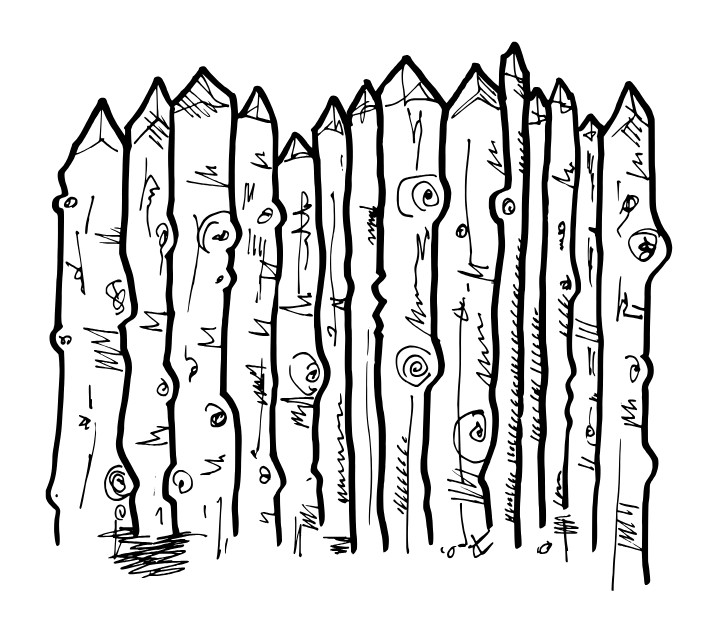
Palisade etymology
From the Latin pālus, “stake”
The wildfires in Los Angeles have been devastating lives and communities, including the neighborhood known as the Pacific Palisades.
Palisade word origin facts
- Originally, a fence built from (wooden) stakes for defense
- Found in English in the late 1500s
- Borrowed from French, ultimately from Latin pālus, “stake, post”
- The Latin pālus is also the source of pole (long rod) and impale
- It is also the origin of the pale in the expression beyond the pale
Palisade was metaphorically extended to some things that resemble staked structures, especially a line of cliffs or other such geological features, hence the Palisades in New Jersey—and, likely named after them, the Pacific Palisades in Los Angeles.
Greenland etymology
Named “green” by Erik the Red to promote settlement
Donald Trump has repeatedly threatened to acquire Greenland, a self-governing territory in the Kingdom of Denmark.
Greenland word origin facts
- Indeed a combination of green and land, based on the Old Icelandic Graenland
- Found in English by at least the 1600s
- According to the Saga of Erik the Red, Erik, exiled from Norway for murder, named the island Greenland around 985 to attract settlers there
- Greenlandic Inuit peoples, especially a group known as the Kalaallit, make up the vast majority of the Greenland population
- They call the country Kalaallit Nunaat, or “Land of the Greenlanders” in Greenlandic, an Inuit language
- Danish and Norwegian for Greenland is Grønland
- English green has cognates in other Germanic languages: German grün, Dutch groen, and others
As the Saga of Erik the Red tells it, Greenland was named as a sales pitch:
In the summer, Eirik went to live in the land which he had discovered, and which he called Greenland. “Because,” said he, “men will desire much the more to go there if the land has a good name.”
The same passage, in Icelandic:
Það sumar fór Eiríkur að byggja landið það er hann hafði fundið og hann kallaði Grænland því að hann kvað menn það mjög mundu fýsa þangað ef landið héti vel.
Of course, Erik didn’t discover Greenland. Indigenous populations long inhabited it—the world’s largest island that is, yes, mostly not very green. Plus, a Norwegian settler of Iceland, Gunnbjörn Ulfsson, is credited with sighting it before Erik.
Emphysema etymology
From the Greek emphūsēma, “swelling”
David Lynch—the surrealist auteur and artist, who directed some of my own very favorite works of cinema and television—died at 78 after battling emphysema.
Emphysema word origin facts
- Originally, a swelling of eyelids attributed to air
- First recorded in the late 1500s
- The sense of “pulmonary emphysema” is by the mid-1700s
- Via French and Latin, ultimately from Greek emphūsēma (ἐμφύσημα), “a swelling or inflation (of the stomach, tissue, etc.)”
The Greek noun emphūsēma is based on a verb meaning “to inflate, blow up,” which is in turn from phūsa (ϕῦσα), “breath, wind.” And wind, indeed, was a motif in his work, especially an auditory one.
Severance etymology
From the Latin sēparāre, “to separate”
The long-awaited second season of the Apple TV thriller Severance launched with notable campaigns and much acclaim.
Severance word origin facts
- Evidenced by the early 1400s
- A French noun form of severer, source of English verb sever
- Ultimately from Latin sēparāre, “to separate”
- Severe is not related, instead from Latin severus (“strict, austere, harsh”), also source of persevere
- Severance pay is by the 1950s
As I have previously explored, the Latin sēparāre combines sē-, a prefix meaning “apart, aside,” and parāre, “to prepare, make.”
Prepare is also rooted in parāre, and that prefix sē- is found in many other Latin verb derivatives, such as seclude, secret, seduce, and segregate—the relevance of that last word feeling too close for comfort in these Lynchian times.
For more etymological coverage of yet more newsworthy words, dip into my archives for the origins of gulf, inauguration, and tariff.


 Mashed Radish
Leave a reply to pamkirst2014 Cancel reply