
Autumn means pumpkins. They sit atop our porch steps and grace our desks in miniature. Pumpkin pies cool on our windows sills. Pumpkin-shaped candies overstuff our grocery shelves. Pumpkin spice flavors our lattes – and just about everything else marketers can get their hands on. Let’s carve into this word pumpkin and scoop out all of its timely etymological seeds.
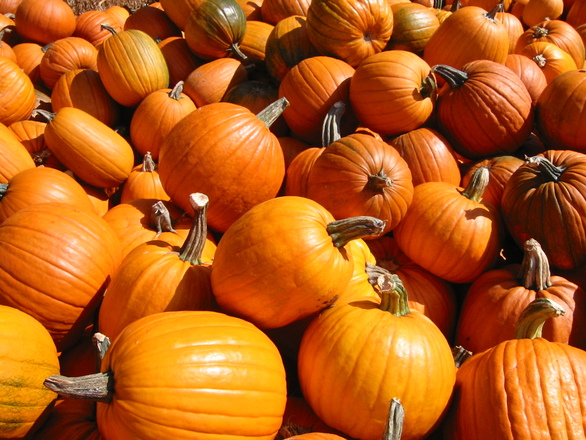
Pumpkin
The earliest record the Oxford English Dictionary finds for pumpkin comes in the form of an insult. In 1647, Nathaniel Ward, a caustic-witted, English-born Puritan who fled to (now) Massachusetts, published a pamphlet opposing the tolerance of other Christian sects, among other topics. In one edition of his screed, called The Simple Cobler of Aggawam in America, Ward bemoans the “pumpkin-blasted brains” of his fellow settlers, whose diet, apparently, depended too much upon this fruit. (Yes, the pumpkin is technically a fruit.) And indeed, Boston, Mass. was nicknamed Pumpkinshire in the 18th century.
Pumpkin pie, meanwhile, dates to the 1650s. By the 1680s, pumpkin, thanks to its rotundity, was mocking “stupid” people, as was pumpkin-head come centuries later. Pumpkin, of course, was repurposed by the 1900s as a term of endearment. And in 19th-century US slang, saying someone or something was “some pumpkins” was to call them “important” or “impressive.”
Pumpkin is a variant of pumpion, itself an alteration of pompion. Pompion, attested in the early 1500s, is borrowed from the French pompon, which names a kind of melon. Pumpkins are native to the Americas, so, when English settlers encountered this squash, they likened it to the plump fruit they were more familiar with back home. English speakers ended up fashioning the ending of pompion with -kin, a Germanic-based, diminutive suffix that survives in some surnames like Watkins and handful of words, including napkin.
The French pompon grew out of the Latin pepō, in turn from the Greek πέπων (pepon); both named types of gourds and melons eaten when ripe. Ripe is the key: Greek’s pepon meant “ripe” (or “yellow”), stemming from the verb πέσσειν (pessien), “to cook.” This pessein and cook, believe it or not, were concocted in the same etymological kitchen: they share the Proto-Indo-European root *pekw-, “to cook” or “ripen.” Concocted and kitchen also come from this root, thanks to a series of complicated sound changes that took place long ago.
And inside melon hides the very word pumpkin. Melon is shorted from Latin’s mēlopepō, from the Greek μηλοπέπων (melopepon). Melopepon marries μῆλον (melon) and πέπων (pepon). As for melon? That actually means apple, making melopepon “ripe apple.”
So, pumpkin means “melon,” and melon means “apple.” The ancients really need to get their fruit and veggies sorted out. This Halloween, I think I’ll just stick with candy.


 Mashed Radish
Leave a comment