
A fancy word for fancy hats owing to Milanese merchants selling fancy wares. Fancy that!
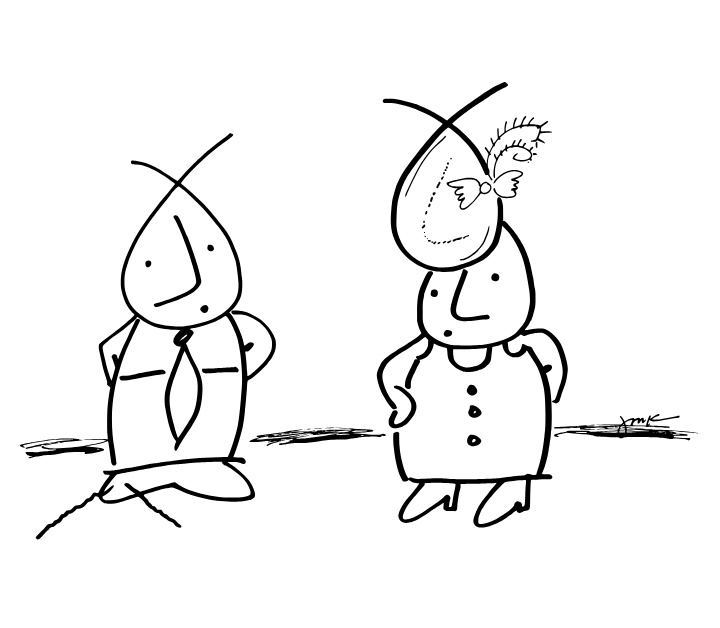
Nothing says the Winter Olympics like … hat-making.
Yes, hat-making!
And women’s hat-making at that.
This year, the 2026 Winter Olympic Games are skating across the ices and slaloming down the mountains in Milan and Cortina d’Ampezzo, Italy.
And we can thank Milan for the English word for a maker and seller of women’s hats: milliner.
Speaking of hats, hold onto yours, because we’re hopping on the etymological ski lift.
Never miss a mash! Feed your inner word nerd and subscribe to get Mashed Radish fresh in your inbox.
The Milanese etymology of milliner
Originally, a milliner was a native or inhabitant of Milan—a Milaner, effectively.
Such a word, used to denote a native or inhabitant of a particular place, is known as a demonym. The name of a place is a toponym.
The Oxford English Dictionary first cites milliner in 1449 in England’s historic Rolls of Parliament in a passage concerning taxes on foreign merchants:
Every Venecian, Italian, Januey, Florentyn, Milener, Lucan, Cateloner, Albertyns, Lumbard, Hansers, Pruciers, beying Merchants or Factours, and all other Merchants straungiers, borne out of youre said Lordshippes, Duchies and Isles, and dwellyng within this youre Royalme, or shall dwell durying the said graunte, paye to you our Soveraigne Lord a Subsidie…
Yep, they’re talkin’ tariffs.
While fascinating in its own right, the passage gives us some important clues to the development of the word milliner.
The spelling Milener
Early on in English, Milan was pronounced with the stress on the first syllable, like [ mill-un ].
Reflecting this stress, the city’s name was even spelled Millen, among other forms, for many centuries.
Add to this pronunciation the suffix -er, for a person belonging to a specific place or group, and you eventually get the spelling milliner.
The context of merchants straungiers
Merchants straungiers are “foreign (stranger) merchants.”
Side note: the passage also mentions factors. A factor originally referred to a broker or agent who transacts business on behalf of another person or company, typically in another country, for a commission. Factor is literally “doer” in Latin.
Early use of milliner didn’t just refer to any old person from Milan, but a merchant.
This close association between Milan and merchandise influenced the fate of the word milliner.
But not just any old merchandise from Milan—but fine and fancy wares, especially articles of women’s apparel crafted there.
And by the 1700s, milliner came to signify the maker or seller of not just any article of women’s apparel—but specifically women’s hats.
Why hats? Why in the 1700s? Why Milan?
Allow me to don the hat, briefly, of amateur historian.
- In the 1700s in Europe, hats became an increasingly fashionable way for women to display class and status.
- Milan was long a commercial powerhouse in Europe. It manufactured high-quality textiles and other materials, including straw and ribbon for bonnets, all-popular in the 1800s.
It is this long history of Milan as a center of business and a region known for its textiles that helped establish Milan as a fashion capital in the latter half of the twentieth century.
Today, millinery, as both women’s hats and the trade of making them are called, gets our attention only every so often, namely, during the Kentucky Derby and British royal weddings.
This periodic spotlight is not unlike—to put a pretty bow on this post and tie my ribbon back to Milan—the Winter Olympics, whose impressive sports see a surge in interest once but every four years.
***
To the athletes skating and skiing and curling and luging, I wish you all the gold, silver, and bronze for your high-flying and death-defying feats.
To my readers, I wish you the warmth of my archives, where you will find my past forays into the origins of the names of winter sports:
Winter Olympics sport words, Part I
- skate, including what figure in figure skating refers to
- ski, including slalom and mogul
- luge
Winter Olympics sport words, Part II
- sleigh and its relative sled
- the bob in bobsled
- curling
- hockey
If you are not into winter sports but like the weather, well, cozy up with the roots of English’s winter weather words.


 Mashed Radish
Leave a comment