
The man believed to have named Venezuela also lent his name to America.

The New Year has not waited for the final chorus of “Auld Lang Syne” to fade from our ears: 2026 has already been off an explosive start.
Not least of which has been the US military raid into Venezuela to capture its authoritarian president Nicolás Maduro—and, as the US’s own authoritarian president made plain, its oil.
But America has raided Venezuela more than once, in an etymological manner of speaking.
Never miss a mash! Feed your inner word nerd and subscribe to get Mashed Radish fresh in your inbox.
The origin of Venezuela
The name Venezuela is widely thought to mean “little Venice” in Spanish.
As the story goes, the Spanish conquistador Alonso de Ojeda sailed into Lake Maracaibo in 1499. Accompanying him was, among others, the Italian merchant and navigator Amerigo Vespucci.
Along the shores, the expedition saw the stilt houses of native peoples living there. These lake villages, apparently, reminded Vespucci of Venice, Italy—that famed city built on water not too far from his home of Florence.
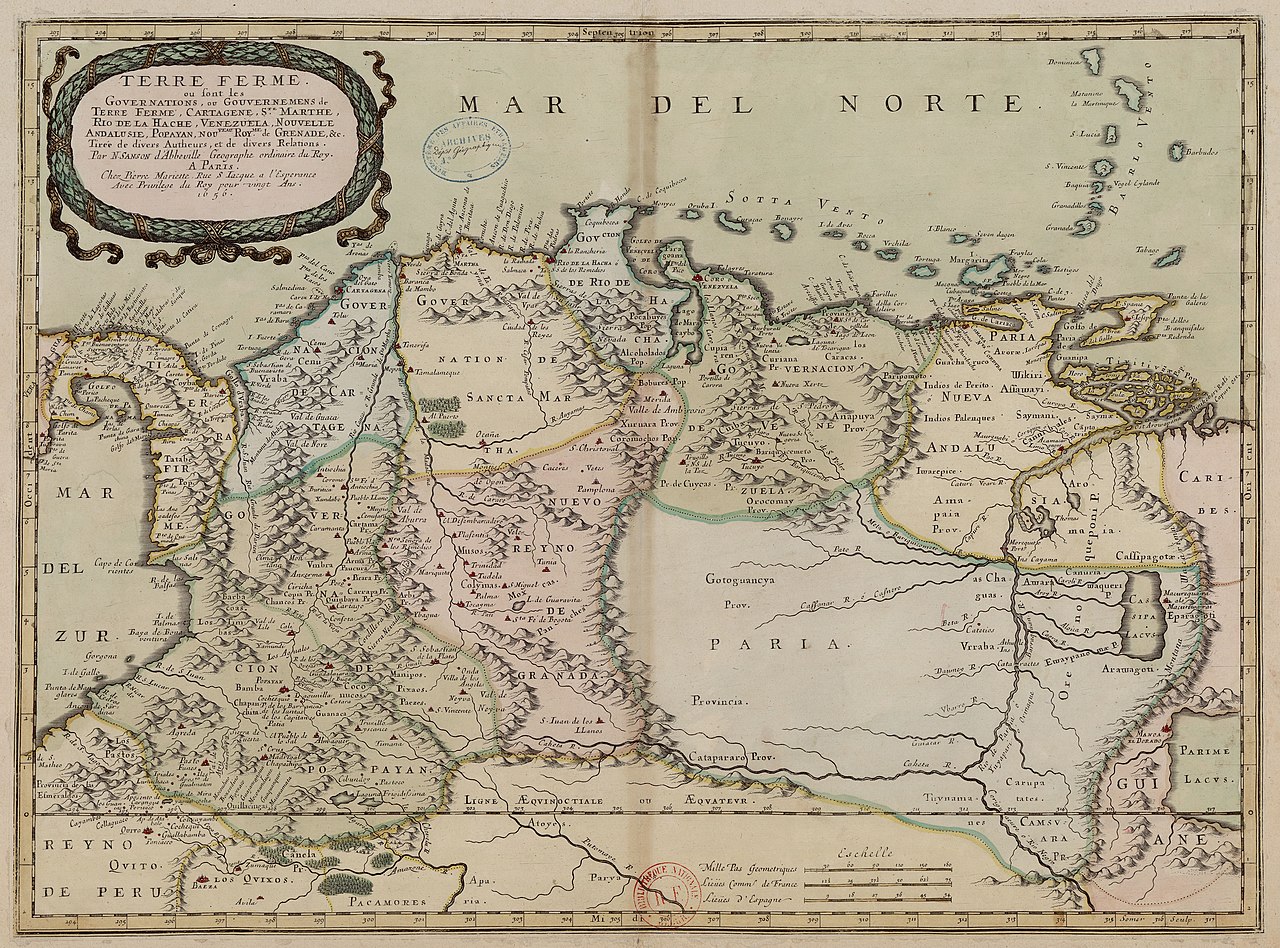
Venezuela is a diminutive form of Venecia, the Spanish name for Venice. Diminutives can be affectionate, of course, but they can also be patronizing. The Spanish diminutive marker, –uela, is inherited from the Latin -ula.
The Italian counterpart to Venezuela is Veneziola. For its part, Venice derives from Veneti, the name of an ancient Indo-European tribe who once inhabited the area. The tribe, and their name, were originally Celtic.
The origin of Veneti isn’t certain, but it may derive from a Proto-Indo-European *wen-, meaning “love, desire,” also the ancient source of such words as Venus, venerate, win, and wish.
Now, the native people de Ojeda and Vespucci encountered—and that the Spanish never fully conquered, though certainly exploited—are known as the Wayuu. The Wayuu speak a language in the Arawakan language family.
It’s quite possible that Venezuela was actually named after a native Arawakan name for what they called themselves or their home. For origin stories, like Vespucci’s christening of Venezuela, are often too good to be true.
Overwater stilt houses, notable not only in South America but all around the world, are known in Spanish as palafitos. Palafito itself comes from the Italian palafitta, literally meaning “fixed stakes”—as in stakes fixed into water to hold up shelters and other structures.
Italian isn’t done yet in our story here, though.
The origin of America
The name America is traditionally held to come from Amerigo Vespucci, that same voyager credited with Venezuela.
Vespucci believed he discovered the so-called New World—and may have been the first to use that phrase, in 1504, in the form of the Italian novo mondo. Around this time, accounts of his voyages spread in Europe, including into the hands of two German cartographers, Martin Waldseemüller and Matthias Ringmann.
In 1507, Waldseemüller published a map illustrating South America as its own continent—and designating it America. In an introduction to the map, his partner, Ringmann, acknowledges the name honors the explorations of Amerigo.

Waldseemüller and Ringmann wrote in Latin, as was the custom of the day, and America is a Latinized version of Amerigo. It’s also feminized—as was another custom, referring to countries as women, of the day.
By the 1530s, America had become established as a name for both northern and southern American land masses. The Flemish cartographer, Gerardus Mercator, namesake of the Mercator projection we still use today, labelled both continents Americae (“the Americas”) in his first map of the world in 1538.

As for the name Amerigo? Here, we depart from the Italian for the Germanic. Amerigo may have descended from a variant of the Germanic name Amalric, “brave ruler.” Emery is indeed so descended.
Amerigo may also have emerged as a form of the long popular name Henry, composed of the Germanic elements heim (“home”) and rihhi (“ruler, king”).
As for who’s the ‘home ruler’ of Venezuela now, well, that appears to be America. Happy 2026.


 Mashed Radish


Leave a comment