The origin of the word “Paralympics” reveals the history of the international sporting sensation—and ultimately wins the straightforwardness it deserves.
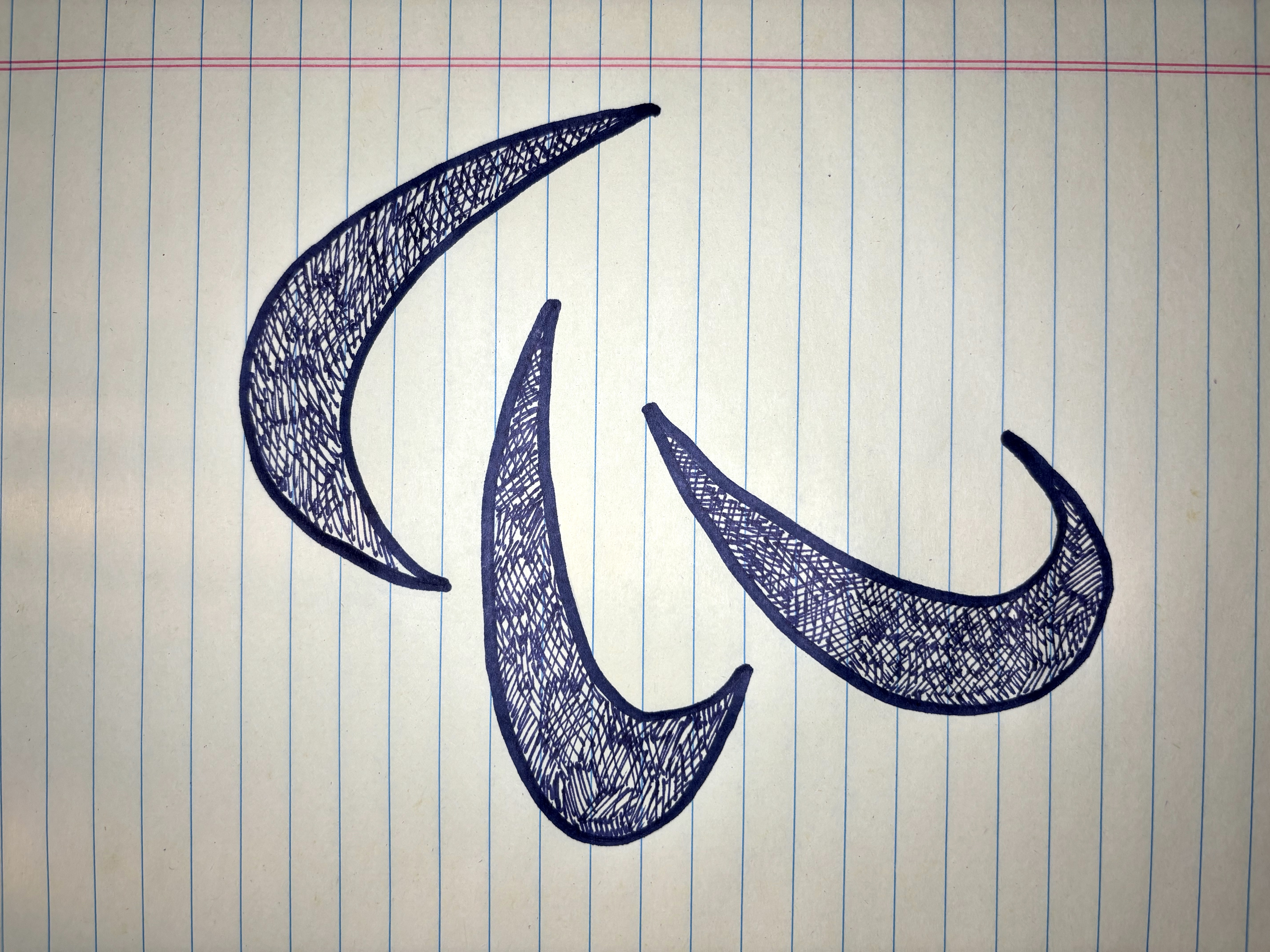
The 2024 Summer Paralympics opened this week in Paris following a magnificent opening ceremony. The Netherlands’ Caroline Groot took home the first gold and a world record in C5 para cycling track.
The term Paralympics, for its part, opened about 70 years earlier.
Merriam-Webster traces Paralympics back to 1953. And the very origin of the word provides some lexical—and historical—insights into the development of the games as such.
The word Paralympics blends para- and -lympics. Para- means “alongside” and -lympics is derived from Olympics, whose name traces back to Greece’s famed Mount Olympos.
Simple, right? Yes and no. It all comes down to how we choose to understand the prefix para-.
The history of the word Paralympics is a bit more complex, but, as we’ll see, we do ultimately arrive at such a straightforward etymology—which I think, in its humble way, confers due dignity and equality for these world-class athletes with disabilities.
A brief (word-based) history of the Paralympics
Originally, the para- portion of Paralympics was derived from paraplegic, which refers to paralysis in the lower part of the body, especially as a result of a disease in or injury to the spinal cord.
Paraplegic is an adjective, describing the condition of such paralysis. It has also been used as a noun for a person so paralyzed.
Today, calling someone “a paraplegic”—unless the person experiencing paraplegia so chooses to be called—is largely considered disparaging, as it reduces them to their disability, which is but one part of their whole.
We see recorded use of paraplegic, according to Google data, peaking in the 1940s—which corresponds to when a Nazi-fleeing German doctor, Dr. Ludwig Guttmann, established a rehabilitative-turned-competitive sporting event for veterans of the Second World War with spinal cord injuries in the UK.
The event—first held in 1948 and called the Stoke Mandeville Games at the hospital in this eponymous village just under two hours northwest of London, which hosted the Summer Olympics starting that very same day—became the Paralympics. The Paralympics debuted as such in 1960 after the Summer Olympics in Rome.
Up until the 1976 Paralympic Games in Toronto, the competition was limited only to athletes in wheelchairs—part of the reason why the Paralympics were once popularly called the “Wheelchair Olympics.” Yeah, that doesn’t really fly today…
Usage pro tip:
Do yourself a favor. Do people with disabilities a favor. Ask them about their preferred language! The language of disability is complex, multifaceted, evolving, and by no means monolithic, as so cogently captured by my old Dictionary.com team in the site’s usage note for this sensitive term.
Also do yourself a favor and check out all the incredible sports—and athletes—at the Paralympic Games, from boccia to blind football.
Since the 1976 Torontolympiad, as it was branded, the Paralympics have included people with a greater range of the disabilities that define our human experience. 1976 also marked the first Winter Paralympics Games in Örnsköldsvik, Sweden.
The roots of paraplegic
Speaking of Rome, it was home to Latin, a language that shuttled many a Greek word or root into English, as is the case for paraplegic.
Paraplegic and the noun paraplegia ultimately stem from the Ancient Greek preposition παρά (pará) and verb πλήσσειν (pléssein).
The Greek pará means, at its core, “beside,” and pléssein, “to strike,” rendering paraplegia with a literal meaning of “struck at the side.” Inflected forms of pléssein in Greek are responsible for that g we see in -plegia.
Para- productivity
Now, if words can earn medals, pará deserves a spot on the podium in the linguistic event of productivity.
The Greek preposition pará—cognate to the Latin per and English’s own for and fore—covered all “sides,” so it also variously signified such relations as “alongside of” or “beyond.”
Bonus word facts:
- In linguistics, a morpheme (like a Lego brick of meaning) such as para- is said to be productive when it is currently and actively used in forming new words.
- English once used for and fore as prefixes, but they are no longer really productive in English, though they live on in many words (e.g., forgive, forlorn, forebode, forefather, to name only a few).
Grammatically in Greek, pará extended itself as a prefix and combining form. Metaphorically, it extended to notions of “amiss, wrong, abnormal.”
Wrong? Abnormal? In the context of the Paralympics? Oof. More on those pejorations in a moment.
Through various assembly kits shipped from etymological IKEAs in English, French, Latin, Greek, and surely more, para- abounds in English.* Here are some examples:
- parable
- paradigm
- paradox
- paragon
- paragraph
- paralegal
- paralyze
- paranormal
- paraphrase
- parasite
And let’s not forget parallel, which ultimately runs out of the Greek pará, “beside,” and allos, “other, different,” source of allele and the prefix allo-, variously featured in such words as allomorph, allophone, or alloromantic.
*There is a less common lookalike para– prefix in English, seen in such words as parachute or parasol. This para- signifies “protection from,” from a Latin verb for “to prepare, defend.”
Side by side
Things that are parallel, then, are literally “beside one another.” Isn’t that just so perfectly clear and crisp?
That appears to be part of the thinking that produced a new interpretation of the meaning and derivation of Paralympics, one that has outgrown the limitations of its paraplegic beginnings—and the hurtful associations of many para- words and uses.
As International Paralympic Committee officially explains:
The word “Paralympic” derives from the Greek preposition “para” (beside or alongside) and the word “Olympic”.
Its meaning is that Paralympics are the parallel Games to the Olympics and illustrates how the two movements exist side-by-side.
Indeed. The origin of Paralympics can—and deserves to be—that simple. Perhaps even etymology can do its own small part to help normalize the Paralympic Games.

 Mashed Radish
Leave a comment