
Is the origin of “brat” a ‘rags’ to riches story? Plus, some unrelated etymological sausage.
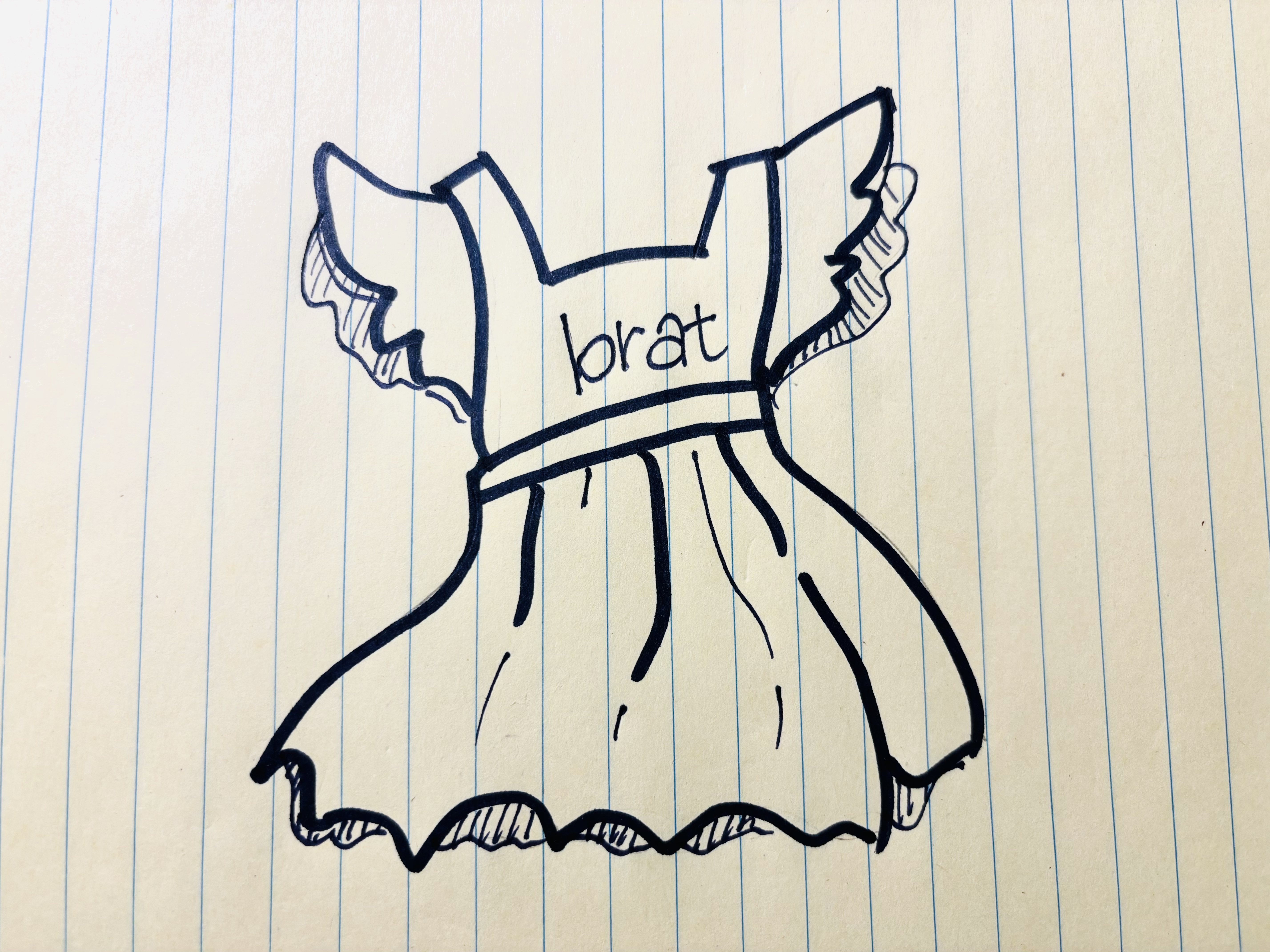
Ah, the internet is doing what it does best: making memes. And making those of us who are less extremely online (🙋♂️) wonder what they are all about.
But we’ll never catch up; the internet has already moved on.
One of the latest centers on calling Vice President Kamala Harris a brat. We can thank British artist Charli XCX for that.
Don’t miss: What is the “vice in vice president?
But you know what I’m wondering about. Where does the word brat itself come from?
Lifting the “cloak” of brat?
The origin of the word brat—a term for a spoiled child—is uncertain. (“Origin uncertain” IS brat, as far as etymology goes.)
There are some interesting theories, however:
- Brat could be from an English dialect term brat, meaning “a child’s apron” or “a woman or girl’s pinafore.” Attested in the 1500s, this brat is derived from the Middle English brat, a term for a “coarse garment” (think rags), from the Old English bratt, which is believed to have been borrowed from a Celtic language for the same.
- Another thought is that brat is shortened from the Scots dialect bratchet, from an Old French word for “hound, bitch (female dog).”
Now, boys can be brats (🙋♂️), of course, although my admittedly very cursory research suggests that girls could be becoming a greater target of brat than boys since the last 15 years or so.
But perhaps brat—as that gloss of “bitch” has brought to mind—is part of a broader trend. Bitch, girl, bossy, brat: these are all terms that, though differing in severity and in the case of brat, exclusivity, have been used to disparage women, but that many women have reappropriated as various expressions of empowerment. (I, for one, love Charli XCX’s own definition of brat, which contains a complexity and multi-dimensionality that sexism so often denies women.)
For much more on brat, including about Brat Pack, see Ben Zimmer’s excellent column on the word earlier this summer in the Wall Street Journal.
How the brats and metts are etymologically made
OK, it’s time for this writer to make a labored transition—and this Cincinnatian to make an unsolicited Midwestern reference! “Kamala is brat” but she will need to win over many in the Midwest—and one way of doing so may be eating up some brats. (Overcooked, I know.)
So, what about that unrelated brat, the kind you serve with a bun, some mustard, sauerkraut, the a in father, and perhaps alongside a mett?
Documented by the late 1940s, that brat is a Midwest shortening of bratwurst, a type of German sausage (usually pork) and recorded in English since the early 1900s.
Wurst means “sausage”; the brat- portion is from the German Brät, referring to a kind of “ground meat” used in sausage-making, perhaps connected to the verb braten, “to roast, bake, fry.”
Mett is from Mettwurst, which is a more strongly flavored pork sausage. Mett is a German term for a kind of “minced meat” and related to English’s own meat.
In time for the 2024 games, brush up on some Olympics-related word origins:

 Mashed Radish
Leave a comment