
The word “tariff” goes all the way back to Arabic.
Update, December 17, 2024: Six years after this post’s original publication, Trump is heading back into office—and is threatening more tariffs, including on the US’s closest trading partners of Canada and Mexico, the cost of which experts say will ultimately be borne by the American consumer.
Economists, businesspersons, and politicians of all stripes are pushing back against Donald Trump’s plan to impose stiff, new aluminum and steel tariffs, or “taxes imposed on imported goods,” in an effort to lower the trade deficit. They are concerned the shortsighted policy will increase costs on US consumers and hurt the economies of close trading parts, like Canada and Germany, triggering a trade war.
If it weren’t for trade, however, we’d have a massive deficit in our vocabulary—including tariff. Let’s have a look at the etymology of this economic word of the moment.
Trading hands, er, tongues
The word tariff was first imposed on the English language in the late 16th century.
The Oxford English Dictionary (OED) attests it in William Garrard’s 1591 manual, The Art of War, in a passage about the logistical organization of battalions. This text, as it happens, may have also been an important source of military information for Shakespeare.
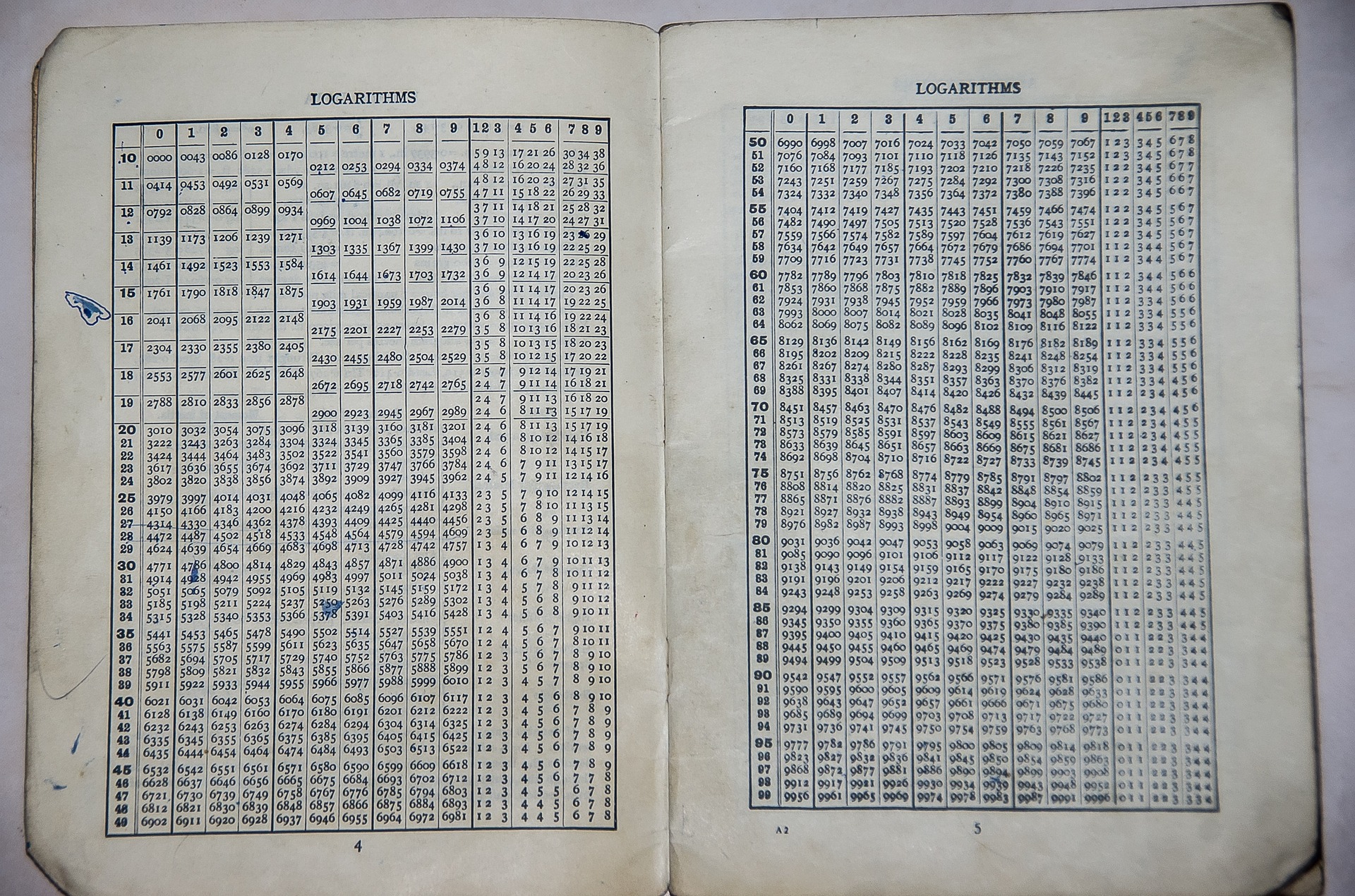
In the passage (p. 224), Garrard advises commanders aid their memory by using “Tablei or Tariffas made of purpose to know the numbers of the souldiers that are to enter into ranke …” Tariffas, here, were a kind of a mathematical table—a cheat sheet, really—for calculating troop arrays.
The spelling of tariffa, with that unfamiliar final a, is a clue that tariff was a loanword. Its lender? The Italian tariffa appears to be the direct source, though the Spanish and Portuguese tarifa may have added to the lexical traffic. The term signified in these tongues “accounting” or, anticipating tariff’s modern sense, “a book of rates for duties.”
Tariff only stopped over in the Mediterranean Romance languages, though, as the word sails further back to the Arabic ta’rif, “information,” “notification,” or more literally, “a making known.” This is what a tariff, or list of charges, does after all: It makes fees known.
Behind ta’rif is an Arabic verb, ‘arafa, “to notify” or “make known,” fashioned from a deeper root used to form all sorts of words variously signifying “knowledge” or “awareness.”
Merchants from Pisa, Genoa, and Venice traded with Arabic peoples in the Middle Ages, and Sicilians had even more intensive contact centuries prior. Evidence for tariffa in Italian appears in a Sicilian document as early as 1338.
Never miss a mash! Feed your inner word nerd and subscribe to get Mashed Radish fresh in your inbox.
From trade wars to Civil Wars
While tariff first denoted a “ready reckoner,” as British English sometimes calls it, the OED records its more technical, and familiar, trade sense in 1592.
Tariff has long been a buzzword in US politics. One of the first acts of Congress, for instance, under the newly ratified Constitution (giving the federal government tariff-slapping power) was the Tariff Act of 1789, taxing imports to help the nascent country get out of debt from its revolution. Throughout the country’s history, tariffs have been a leading source of federal revenue — and contention, with Southerners calling an 1828 tariff the “Tariff of Abominations,” as they felt the policy would hurt the ability of the British to buy the cotton grown by enslaved people.
Some historians cite that tariff as a contributing factor not to a trade war, but to the Civil War.
Trade resulted in great number of other Arabic words in English—like mocha. Discover how!

 Mashed Radish
Leave a comment