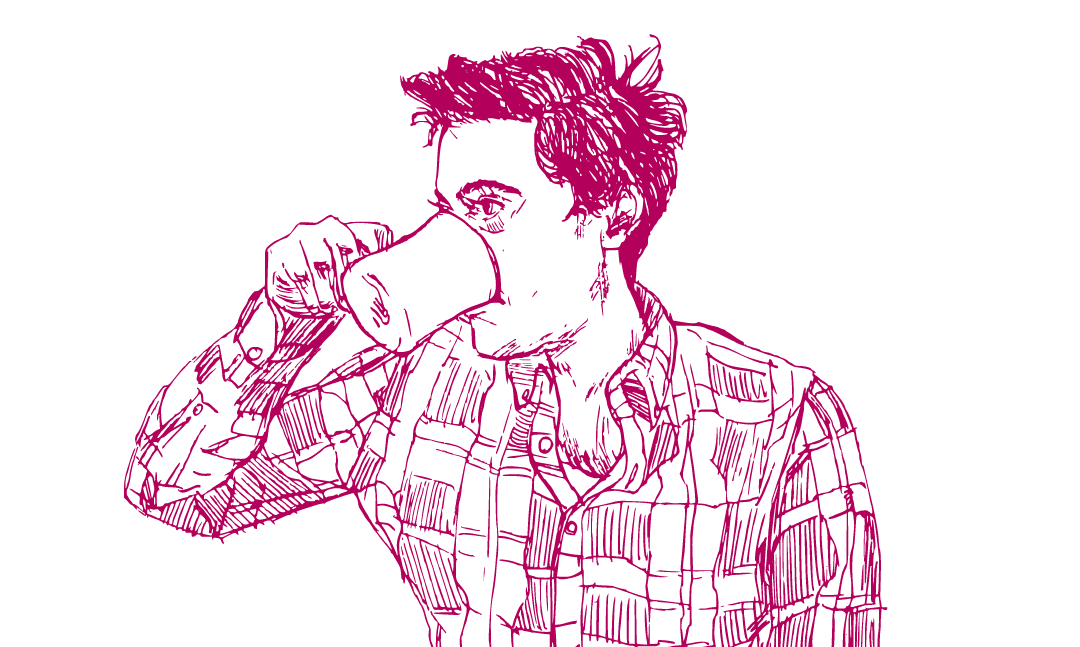
The etymological bones of “skate” may also be literal ones.
Updated February 7, 2026
This weekend marks the opening of the XXII Winter Olympic (and, lest we forget, Paralympic) Games in Sochi, Russia.
Athletes will produce a blizzard of speed, spins, and sticks as they compete in 15 major events far removed from many of our everyday experiences—except for that “polar coaster” most of the country seems to be riding of late.
The origin of skis, skates, and sleds certainly had their practical purposes in more historic, northerly life, from hunting and transport to much needed recreation and release from months of cold, dark, and cramped quarters.
But what about the origin of skis, skates, and the words for other winter sports?
In this post, we will look at skate, ski, and luge.
Never miss a mash! Feed your inner word nerd and subscribe to get Mashed Radish fresh in your inbox.
Skate etymology
Make no bones about it: skate originates in a mistaken plural.
The Dutch for these frames, fixed to the soles of shoes for gliding across ice, is schaats in the singular and schaatsen in the plural.
The English understood this singular schaats as a plural, lopping off the final s to generate skate, as it eventually came to be spelled.
It’s very possible that the Dutch developed the word from Old North French, escace or escache, meaning “stilt.” This, in turn, could be from the Frankish *skakkja, related to English’s shake.
It could also be related to English’s shank, as in the part of the leg. Shank may be rooted in the Proto-Indo-European *skeng-, “crooked,” like a bent leg.
Make bones about that, for “the earliest skates were made of shank-bones” from animals, as the etymologist Ernest Weekley noted.
Noah Webster, meanwhile, made a point to specify quadrupeds.
Apparently, skating “was popularized at the Restoration…, Charles II’s followers having learnt the art in Holland,” as Weekley remarked. On this, Weekley cites the Diary of John Evelyn from December 1, 1660:
The strange and wonderful dexterity of the sliders on the new canal in St. James’s Park, performed before their Maties by divers gentlemen and others with skeets, after the manner of the Hollanders.
Before their Maties, indeed. Anthropologically, this would ultimately be in the manner of Ancient Finland, as the earliest skates are found in Scandinavia and Russia.
Why is called figure skating?
Recorded by 1834, figure skating originally involved performing intricate, set patterns—or figures—on the ice itself.
The Oxford English Dictionary dates this figure to 1772, citing a treatise on ice skating: “to Cut a Figure of a Heart on one Leg.”
Here’s an instructive note from the OED in its entry for this sense of figure:
The earliest uses in the context of ice skating refer to skaters marking or cutting particular shapes or designs on the surface of the ice with the blades of their skates while skating. The precise and technically proficient execution of the movements required to describe such shapes became a recognized aspect of the sport as the discipline of figure skating developed. The performance of compulsory figures (sometimes also called school figures or compulsory school figures) remained a part of competitive figure skating until 1990.
The sport and art of figure skating evolved, of course, to emphasize various jumps, spins, and other elaborate moves.
Ski etymology
Ski rides an etymological bunny slope down from the Norwegian ski, in turn from the Old Norse skið, “snowshoe,” and yet older, as the ODEE puts it, a “billet of cleft wood.”
Related are Old English’s scid and shide, which point to the Proto-Germanic *skid– and yet further back to the Proto-Indo-European *skei-, “to cut” or “split.”
The English verb shed, as in to “cast off,” still carries this old sense of cutting or splitting in watershed, with its metaphorical and geographical dividing points. No little buildings involved.
Where does slalom come from?
Slalom refers to a downhill ski race that zigzags through a course marked by upright flags or poles.
Slalom was borrowed into English by 1921 from the Norwegian slalåm, “sloping track.”
Sla means “sloping” and låm means “track.”
The English slant and lane are related.
Where does mogul come from?
A mogul is a bump on a ski run.
Borrowed into English by 1953, mogul comes from the German Mugel, an Austrian dialectical word for “little hill” based on Mocke, “lump.”
The English spelling of mogul was apparently influenced by Mogul, an important member of a Muslim dynasty descended from the Mongolian Genghis Khan and whose 16th–19th century power was later metaphorically extended to other such personages.
Luge etymology
Most of my dictionaries leave luge’s origin as unknown. French, Swiss, and Gaulish origins are offered. The Online Etymology Dictionary presents Medieval Latin’s sludia (“sled”) as a possibility. Improbable, but hey, so was everything about Cool Runnings.
In Part II, I pick up with sleigh, bobsled, curling, and hockey.


 Mashed Radish
Leave a comment